
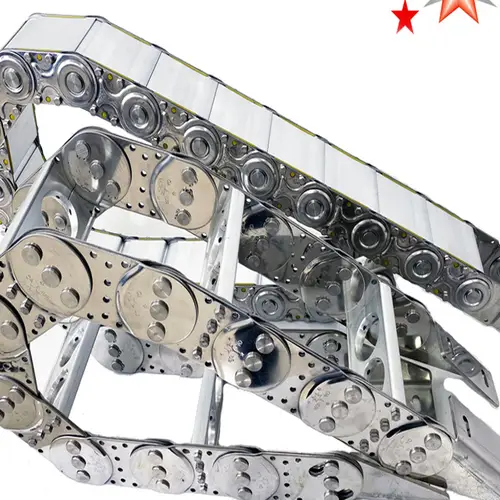
Hochleistungsfähige Stahlseil-Schleppketten für industrielle Anwendungen
Unsere hochbelastbaren Stahlseil-Zugketten sind die zuverlässigste und effizienteste Lösung zum Führen, Umfassen und Schützen von elektrischen Kabeln, Ölleitungen und Schläuchen während des Maschinenbetriebs. Diese Seilträger sind für dynamische Anwendungen zwischen festen und beweglichen Maschinenteilen konzipiert und tragen dazu bei, den Verschleiß von Kabeln und Leitungen zu reduzieren, Kabelverwicklungen zu verhindern und die Maschinenleistung und -optik zu verbessern.
Was sind Stahlseilketten?
Stahlseilketten dienen der Führung und dem Schutz von Kabeln, Ölleitungen und Schläuchen während der Maschinenbewegung. Sie eignen sich für dynamische Anwendungen zwischen festen und beweglichen Maschinenteilen. Der Einsatz von Seilketten trägt zur Verbesserung der Maschinenleistung und des Erscheinungsbilds bei, verhindert Kabelverwicklungen und reduziert den Verschleiß von Kabeln und Schläuchen.
Wie wählt man die richtige Kabelkette aus?
Die Innenhöhe der Kabelkette entspricht der Höhe des dicksten Teils des intern verlegten Kabels, der Öl-, Gas- oder Wasserleitung zuzüglich mindestens 10% der Raumhöhe. Bei Überlappungen ist die überlappende Höhe als tatsächliche Höhe zu verwenden. Die Innenbreite entspricht der Summe der Außendurchmesser der dickeren Kabel, Öl-, Gas- oder Wasserleitungen zuzüglich eines Sicherheitsabstands von mindestens 10%. Der Biegeradius entspricht dem größten Biegeradius eines Kabels, einer Öl-, Gas- oder Wasserleitung zuzüglich eines Sicherheitsabstands von 10%.
Konstruktion der Kabelkette
Die Seilkette ähnelt dem Raupenfahrwerk eines Tanks und besteht aus mehreren Gliedern. Die Glieder des Raupenfahrwerks sind frei drehbar. Ketten derselben Baureihe weisen die gleiche Innen- und Außenhöhe sowie die gleiche Teilung auf, jedoch können Innenbreite und Biegeradius (R) individuell angepasst werden. Ein Kettenglied besteht aus einer linken und einer rechten Kettenplatte sowie einer oberen und unteren Abdeckung. Jedes Kettenglied lässt sich öffnen, um die Montage und Demontage ohne Gewinde zu erleichtern. Nach dem Öffnen der Abdeckung können Kabel, Öl- und Gasleitungen in die Seilkette eingeführt werden. Zur Unterteilung des Ketteninneren in Abschnitte sind Distanzstücke erhältlich, die je nach Bedarf verwendet werden können.
Produktparameter
| Größe | Tonhöhe | Biegeradius | Innenhöhe | Außenhöhe | Mindestbreite innen | Innen Max-Loch | Kantenstärke |
|---|---|---|---|---|---|---|---|
| TL45 | 45 | 50/75/90/114/145 | 16 | 32 | 35 | 18 | 8 |
| TL65 | 65 | 75/90/115/125/145/185 | 25 | 44 | 50 | 30 | 8 |
| TL80 | 80 | 100/115/125/145/185/200/250/300 | 32 | 56 | 55 | 35 | 8 |
| TL95 | 95 | 115/145/200/250/300 | 48 | 70 | 60 | 48 | 10 |
| TL115 | 115 | 145/200/225/250/300/350 | 58 | 86 | 70 | 63 | 11 |
| TL125 | 125 | 200/250/300/470/500/575/600/700/750 | 68 | 100 | 80 | 68 | 12 |
| TL155 | 155 | 250/300/350/450/490/600/650 | 86 | 120 | 90 | 97 | 13 |
| TL180 | 180 | 250/300/350/450/490/600/650 | 112 | 144 | 100 | 110 | 14 |
| TL225 | 225 | 400/450/600/750/800/850/1000 | 165 | 200 | 160 | 146 | 14 |
| TL250 | 250 | 400/450/500/600/750/800/1000 | 187 | 220 | 190 | 166 | 16 |
Neben unseren hochbelastbaren Stahlseil-Energieführungsketten bietet die EVER-POWER GROUP ein breites Sortiment an Industrieprodukten an, darunter Landwirtschaftsgetriebe, Antriebswellen, Kettenräder, Kupplungen, Schneckengetriebe, Zahnräder und Zahnstangen, Industrieketten, Riemenscheiben, Planetengetriebe, Zahnriemenscheiben, Buchsen und vieles mehr. Unsere Produkte zeichnen sich durch hohe Qualität, attraktive Preise und einen umfassenden Service aus. Gerne fertigen wir Zeichnungen und Muster nach Ihren individuellen Anforderungen an.
Häufig gestellte Fragen
1. Wozu werden Stahlseilketten verwendet?
Stahlseilketten dienen der Führung, dem Schutz und der Fixierung von elektrischen Kabeln, Ölleitungen und Schläuchen während der Maschinenbewegung. Sie eignen sich für dynamische Anwendungen zwischen festen und beweglichen Maschinenteilen und tragen dazu bei, den Verschleiß von Kabeln und Leitungen zu reduzieren, Kabelverwicklungen zu verhindern und die Maschinenleistung sowie das Erscheinungsbild zu verbessern.
2. Wie wähle ich die richtige Kabelkette aus?
Die Innenhöhe der Kabelkette entspricht der Höhe des dicksten Teils des intern verlegten Kabels, der Öl-, Gas- oder Wasserleitung zuzüglich mindestens 10% der Raumhöhe. Bei Überlappungen ist die überlappende Höhe als tatsächliche Höhe zu verwenden. Die Innenbreite entspricht der Summe der Außendurchmesser der dickeren Kabel, Öl-, Gas- oder Wasserleitungen zuzüglich eines Sicherheitsabstands von mindestens 10%. Der Biegeradius entspricht dem größten Biegeradius eines Kabels, einer Öl-, Gas- oder Wasserleitung zuzüglich eines Sicherheitsabstands von 10%.
3. Wie sind die Kabelketten konstruiert?
Die Seilkette ähnelt dem Raupenfahrwerk eines Tanks und besteht aus mehreren Gliedern. Die Glieder des Raupenfahrwerks sind frei drehbar. Ketten derselben Baureihe weisen die gleiche Innen- und Außenhöhe sowie die gleiche Teilung auf, jedoch können Innenbreite und Biegeradius (R) individuell angepasst werden. Ein Kettenglied besteht aus einer linken und einer rechten Kettenplatte sowie einer oberen und unteren Abdeckung. Jedes Kettenglied lässt sich öffnen, um die Montage und Demontage ohne Gewinde zu erleichtern. Nach dem Öffnen der Abdeckung können Kabel, Öl- und Gasleitungen in die Seilkette eingeführt werden. Zur Unterteilung des Ketteninneren in Abschnitte sind Distanzstücke erhältlich, die je nach Bedarf verwendet werden können.
4. Welche anderen Industrieprodukte bietet die EVER-POWER GROUP an?
Zusätzlich zu unseren Hochleistungs-Stahlseil-Schleppketten bietet die EVER-POWER GROUP auch eine breite Palette von Industrieprodukten an, darunter Landwirtschaftsgetriebe, Antriebswellen, Kettenräder, Flüssigkeitskupplungen, Schneckengetriebe, Zahnräder und Zahnstangen, technische Ketten, Riemenscheiben und Rollen, Planetengetriebe, Zahnriemenscheiben, Buchsen und vieles mehr.
5. Kann ich Zeichnungen und Muster an meine spezifischen Bedürfnisse anpassen?
Ja, wir begrüßen es, wenn Kunden Zeichnungen und Muster an ihre spezifischen Bedürfnisse anpassen.
Alle Inhalte dieser Seite stammen aus dem Internet und dienen lediglich als Referenz für die Produktauswahl. Unsere Produkte sind Ersatzteile und keine Originalteile. Wir sind nicht Inhaber der Markenrechte an den Inhalten. Unsere Produkte eignen sich ausschließlich als Ersatzteile für den Kundendienst und sind keine Originalteile. Unsere Ersatzteile sind jedoch perfekt auf die Originalteile abgestimmt. Wenn Sie Originalteile benötigen, wenden Sie sich bitte an den Originalhersteller bzw. -lieferanten.
Leistungsmerkmale der technischen Kette
Konstruktionsketten finden aufgrund ihrer außergewöhnlichen Leistungseigenschaften in verschiedenen Branchen breite Anwendung. Zu diesen Eigenschaften zählen hohe Festigkeit, Langlebigkeit, Verschleißfestigkeit und geringer Wartungsaufwand.
Arten und Eigenschaften von Konstruktionsketten
Technische Ketten lassen sich anhand ihrer Struktur, ihrer Einsatzgebiete und der verwendeten Materialien klassifizieren. Zu den verschiedenen Arten von technischen Ketten zählen Rollenketten, Förderketten, Blattketten und Spezialketten. Jede Art besitzt spezifische Eigenschaften, die sie für bestimmte Anwendungen prädestinieren. So werden beispielsweise Rollenketten aufgrund ihres hohen Wirkungsgrades häufig in Antriebssystemen eingesetzt, während Förderketten aufgrund ihrer Langlebigkeit und Verschleißfestigkeit ideal für den Materialtransport geeignet sind.
Vorteile von Konstruktionsketten aus verschiedenen Materialien
Technische Ketten können aus verschiedenen Materialien wie Edelstahl, Kohlenstoffstahl und Kunststoff gefertigt sein. Jedes Material hat seine spezifischen Vorteile und eignet sich daher für bestimmte Anwendungsbereiche. So sind beispielsweise Edelstahlketten äußerst korrosionsbeständig und für den Einsatz in rauen Umgebungen geeignet, während Kunststoffketten leicht sind und sich ideal für Bereiche eignen, in denen Geräuschdämpfung wichtig ist.
Anwendungen der Konstruktionskette
Ketten finden in verschiedenen Branchen breite Anwendung, beispielsweise in Förderanlagen, Materialtransportsystemen, Antriebssystemen, automatisierten Parksystemen, im Bergbau und in Steinbrüchen. Ihre herausragenden Leistungseigenschaften machen sie ideal für diese Bereiche und haben sich als unschätzbar wertvoll für die Steigerung von Effizienz und Produktivität in diesen Branchen erwiesen.
Zukünftige Entwicklungstrends und Chancen von Produkten der Fertigungskette
Die Zukunft von Fertigungsketten sieht vielversprechend aus und bietet erhebliche Wachstums- und Entwicklungsmöglichkeiten. Die steigende Nachfrage nach Automatisierung und technologischen Fortschritten in verschiedenen Branchen treibt die Nachfrage nach Fertigungsketten an. Mit dem Aufkommen intelligenter Fabriken und Industrie 4.0 besteht ein Bedarf an leistungsstarken Fertigungsketten, die den hohen Anforderungen automatisierter Fertigungsprozesse standhalten.
Wie man eine geeignete Konstruktionskette auswählt
Die Auswahl einer geeigneten Antriebskette erfordert Kenntnisse über die Anwendungsanforderungen, den benötigten Kettentyp, das Kettenmaterial und die Kompatibilität mit den Kettenrädern. Die Anwendungsanforderungen bestimmen den Kettentyp, während das Kettenmaterial von der Einsatzumgebung abhängt. Die Kompatibilität mit den Kettenrädern ist unerlässlich, um optimale Leistung zu gewährleisten und vorzeitigen Verschleiß zu vermeiden.
Abschluss
Zusammenfassend lässt sich sagen, dass Konstruktionsketten in verschiedenen Branchen unverzichtbar sind und ihre herausragenden Leistungseigenschaften sie zu einem wertvollen Bestandteil für die Steigerung von Effizienz und Produktivität dieser Branchen machen. Die Auswahl einer geeigneten Konstruktionskette erfordert ein fundiertes Verständnis der Anwendungsanforderungen, des Kettentyps, des Materials und der Kompatibilität mit den Kettenrädern.
Autor: Traum