
Product Description
Crawler Excavator 400*74*72 Track Chain for Engineering Machinery Equipment Parts
| 1.Model no. | 400*74*72 |
| 2.Origin | China |
| 3.Application | Excavator |
| 4.Material | Rubber and Steel |
| 5.Weight | 128KG |
| 6.Condition | New |
| 7.Certification | ISO9001:2000 |
| 8.Port | ZheJiang ,China |
| 9.HS Code | 84314999 |
| 10.Feature | Wear-resistant,Heat-resistant,Tear-resistant |
| 11.Transport Package | Pallet with plastic wrapping/Nude Packing |
| 12.Color | Black |
| 13.Trade Mark | OEM Available |
SIZES
| 110/84 | 400/90DH | 500/90NA |
| 180/84W | 400/90JG | 500/90NAS |
| 200/84W | 400/90JK | 500/90NER |
| 250/84N8S | 400/90JW | 500/90NK |
| 280/79 | 400/90L | 500/90NK1 |
| 280/90 | 400/90N | 500/90NKE |
| 280/90KP | 400/90NC | 500/90NKH |
| 300/84N | 400/90NJ | 500/90NKS |
| 300/84NS | 400/90NJN | 500/90NS |
| 300/84YC | 400/90NJNS | 550/90A |
| 300/90D | 400/90NJS | 550/90B |
| 320/45(BC) | 400/90NK | 550/90KA2 |
| 320/45(TK) | 400/90NKS | 550/90N |
| 330/101.6 | 400/90NKW | 550/90NA |
| 330/72N7 | 400/90NS | 550/90NAS |
| 330/72N7S | 400/90NW | 550/90NER |
| 330/79N | 400/90NWS | 550/90NIH |
| 330/79NER | 400/90P | 550/90NK |
| 330/79NK | 400/90THC | 550/90NK2 |
| 330/79NKS | 410/90NER | 550/90NKS |
| 330/79NS | 420/84 | 550/90NS |
| 330/84N | 420/84DS | 550/90NSY |
| 330/84NC | 420/84N | 600/100(Ar) |
| 330/84NS | 420/84NS | 625/90 |
| 330/84YC | 420/90NK | C350/90 |
| 330/90 | 420/90NKS | C350/90H |
| 330/90N90S | 425/90 | C400/90 |
| 330/90N9I | 425/90D | C400/90H |
| 330/90N9IS | 450/90B | C400/90Y |
| 330/90NS | 450/90C | C450/90 |
| 350/84N | 450/90D | C450/90H |
| 350/84NS | 450/90DS | C500/90U |
| 350/90D | 450/90DT | D300/90 |
| 350/90L | 450/90JW | D350/90 |
| 350/90S | 450/90JWH | D400/90 |
| 360/79N | 450/90KP | D400/90A |
| 360/79NK | 450/90KU | D450/90 |
| 360/79NKS | 450/90L | D500/90 |
| 360/79NS | 450/90N | D500/90U |
| 360/90N | 450/90NA | DS400/90 |
| 360/90NER | 450/90NAS | DS450/90 |
| 360/90NKS | 450/90NER | DT450/90 |
| 360/90NS | 450/90NK | KB400/90 |
| 400/72 | 450/90NKS | 450/90JG |
| 400/79 | 450/90NS | 400/90P |
| 400/79NK | 450/90NW | D450/90G |
| 400/84 | 460/90 | 500/92W |
| 400/84R | 460/90C | 450/90DF |
| 400/84YC | 460/90HK | C450/90 |
| 400/84YCH | 460/90NK | 350/90X |
| 400/84YCL | 460/90NKS | 400/90DC |
| 400/90A | 470/90NER | 450/90DC |
| 400/90B | 500/100(Ar) | 500/90DC |
| 400/90C | 500/90CS | 550/90DC |
| 400/90CS | 500/90D | 350×90XB |
| 400/90D | 500/90DS | C450×90Z |
| 400/90D1 | 500/90JK | C450x90HL |
| 400/90D1S | 500/90JW | YM500/90 |
| 400/90DA | 500/90JWH | 500/90AW |
| 400/90DF | 500/90N | 575/93 |
Extreme Durability & Performance
Our joint free track structure, Special designed tread pattern, 100% virgin rubber,and 1 piece forging insert steel result extreme durability & performance and longer service life for construction equipment use. CHINAMFG rubber tracks perform a high level of reliability and quality with our latest technology in mold tooling and rubber formulation.
Product Warranty
All our rubber tracks are made with a serial Number, we may trace the product date against the serial Number.
It’s normally 1year factory warranty from production date, or 1200 working hours.
Rubber Track Show:
Our customers:
John Deere,Challenger,Case,Morooka,Caterpollar,ASV,Hitachi,Hyundai,IHI,JCB,Vermeer and so on.
Workshop Producing show:
Packing show:
5)Factory show
6)Transfer way:
By sea
7)FAQ:
Q: Are you trading company or manufacturer ?
A: We are Integration of industry and trade, with over 20 years experience in rubber track. Our company have accumulated skilled production line, complete management and powerful research support, which could match all of the customers’ requirements and make them satisfaction.
Q: What is your main product?
–Rubber Track:different types tracks for machines
Q: What if I don’t know which type I need?
A: Don’t worry, Send the machine item of your using, our team will help you find the right 1 you are looking for.
Q: What is your terms of payment ?
A: Payment≤1000USD, 100% in advance. Payment≥1000USD, 30% T/T in advance ,balance before shippment.
If you have another question, pls feel free to contact us as below:
Q: How to delivery:
A: By sea – Buyer appoint forwarder, or our sales team find suitable forwarder for buyers.
Q: How long is your delivery time?
A: Generally it is 10-15 days if the goods are in stock. or it is 20-30 days if the goods are not in stock, it is according to quantity.
/* January 22, 2571 19:08:37 */!function(){function s(e,r){var a,o={};try{e&&e.split(“,”).forEach(function(e,t){e&&(a=e.match(/(.*?):(.*)$/))&&1
| After-sales Service: | Yes |
|---|---|
| Warranty: | 12months Under Normal Use |
| Type: | Track |
| Samples: |
US$ 200/Piece
1 Piece(Min.Order) | Order Sample |
|---|
| Customization: |
Available
| Customized Request |
|---|
.shipping-cost-tm .tm-status-off{background: none;padding:0;color: #1470cc}
|
Shipping Cost:
Estimated freight per unit. |
about shipping cost and estimated delivery time. |
|---|
| Payment Method: |
|
|---|---|
|
Initial Payment Full Payment |
| Currency: | US$ |
|---|
| Return&refunds: | You can apply for a refund up to 30 days after receipt of the products. |
|---|
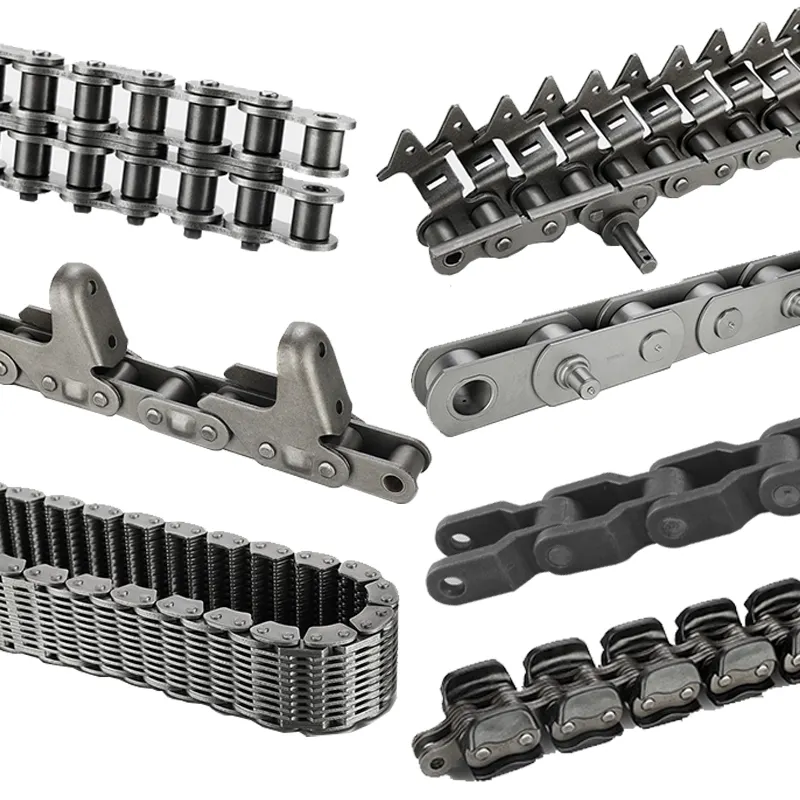
Can engineering chains be used in high-temperature environments?
Yes, engineering chains can be used in high-temperature environments, but their performance depends on the type of material they are made of and the specific temperature conditions they are exposed to. Here are some considerations for using engineering chains in high-temperature environments:
- Material Selection: Chains made from heat-resistant materials, such as stainless steel or special alloy steels, are suitable for high-temperature applications. These materials offer increased resistance to heat, oxidation, and corrosion.
- Lubrication: Proper lubrication is critical when using engineering chains in high-temperature environments. High-temperature lubricants that can withstand the specific temperature range are essential to reduce friction and wear between the chain’s components.
- Heat Dissipation: In high-temperature environments, the heat generated by the chain’s operation needs to be dissipated effectively to prevent excessive temperature rise. Adequate ventilation or cooling mechanisms may be required to maintain the chain within a safe operating temperature range.
- Chain Design: Chains intended for high-temperature use may have specific design features that enhance their heat resistance and performance. These design modifications can include heat-resistant coatings, special alloys, or heat-treated components.
- Operating Conditions: The operating conditions, such as the temperature range and the duration of exposure to high temperatures, should be carefully evaluated to ensure the chain’s material and lubrication are suitable for the specific application.
- Inspections and Maintenance: Regular inspections and maintenance are crucial to monitor the chain’s condition and performance in high-temperature environments. Any signs of wear, elongation, or damage should be addressed promptly to prevent potential failures.
When properly selected, lubricated, and maintained, engineering chains made from heat-resistant materials can reliably operate in high-temperature environments. It’s essential to consult with chain manufacturers or experts to determine the most suitable chain type and material for a specific high-temperature application.
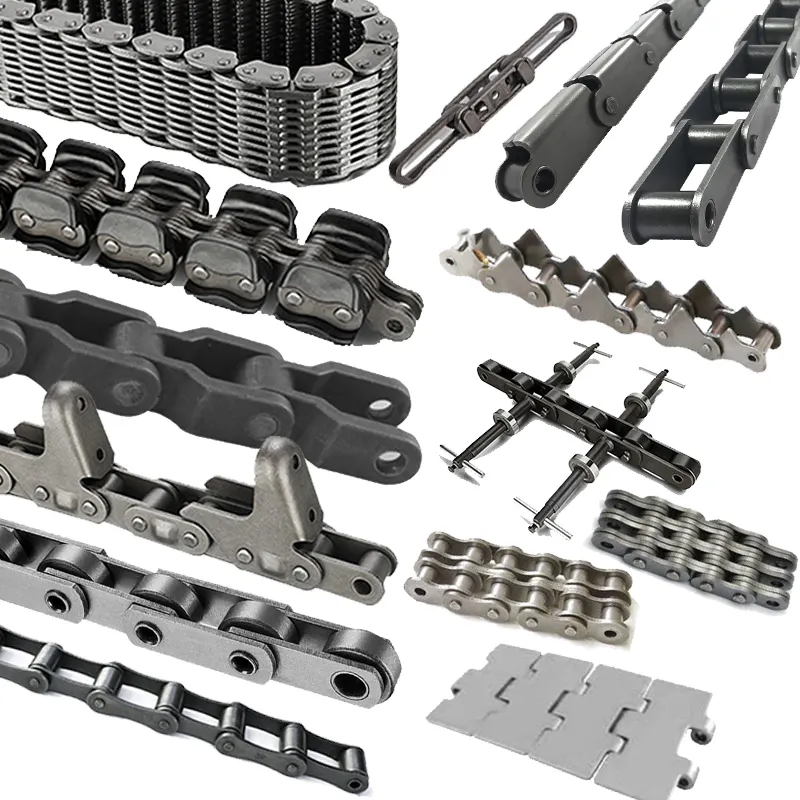
How do engineering chains handle product accumulation and spacing in conveyor systems?
In conveyor systems, product accumulation and spacing are essential considerations to ensure smooth and efficient material handling. Engineering chains play a crucial role in managing product flow and maintaining proper spacing between items. Here’s how they handle these tasks:
1. Accumulation: Engineering chains can be designed with special attachments that allow for product accumulation. These attachments create zones on the conveyor where products can accumulate without interrupting the overall conveyor operation. The accumulation zones are usually equipped with sensors or photo eyes to detect product presence and control the chain’s movement, preventing collisions and jams.
2. Spacing: To achieve proper spacing between products on the conveyor, engineering chains may be equipped with specially designed attachments or guides. These guides ensure that each item is evenly spaced from the one in front of it, preventing product collisions and maintaining a consistent flow. The spacing between products can be adjusted by modifying the length of the conveyor or changing the attachment configuration on the chain.
3. Timing and Synchronization: In automated conveyor systems, engineering chains are often used to synchronize the movement of products. Through precise control and positioning, the chain ensures that items are released at the correct intervals, maintaining the desired spacing and preventing congestion.
4. Low Back Pressure: Engineering chains can be designed with low back pressure accumulation, which allows products to accumulate while maintaining gentle contact with each other. This reduces the risk of damage to delicate or sensitive items and improves overall product handling.
5. Diverter and Merge Solutions: Engineering chains can incorporate diverters and merge units to redirect products to different conveyor lines while maintaining proper spacing. These units efficiently manage product flow and distribution in complex conveyor systems.
6. Customization: Manufacturers can customize engineering chains to suit specific product sizes, weights, and handling requirements. This ensures optimal performance and reduces the risk of jams or disruptions in the conveyor system.
Overall, engineering chains are integral components in conveyor systems, enabling effective product accumulation and spacing. Their precise control, customizability, and synchronization capabilities contribute to the smooth and efficient operation of material handling processes in various industries.
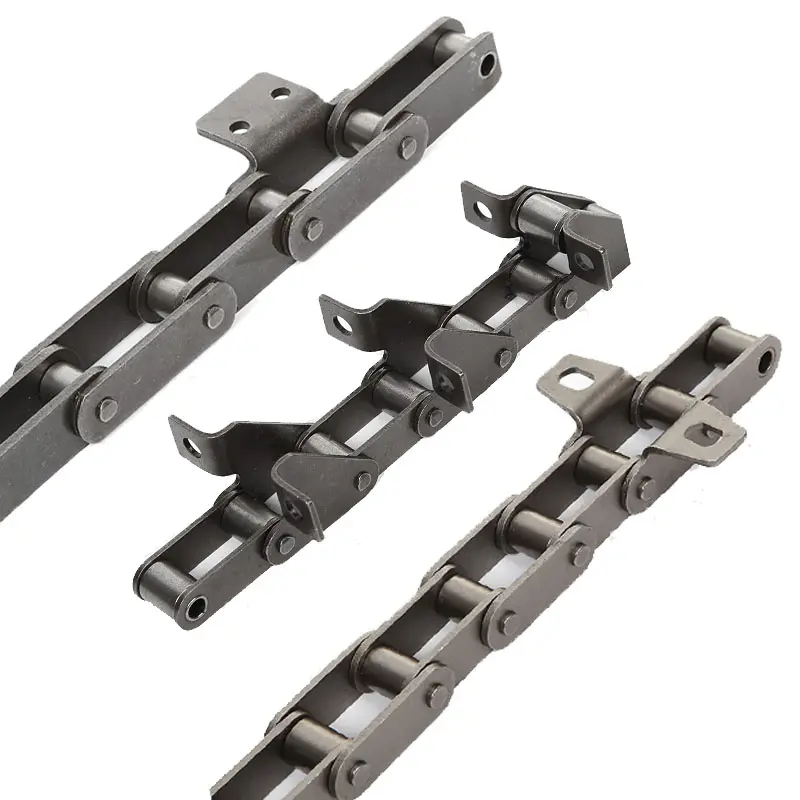
How do engineering chains handle shock loads and impact forces?
Engineering chains are designed to handle a range of loads, including shock loads and impact forces, encountered in various industrial applications. Their ability to withstand these forces depends on several factors:
1. Material Selection: High-quality engineering chains are often made from robust materials such as alloy steel or stainless steel. These materials provide excellent strength and durability, allowing the chain to handle shock loads without permanent deformation or failure.
2. Chain Design: The design of engineering chains plays a crucial role in their ability to handle shock loads. The chain’s structure, such as the shape and size of its components, determines its load-bearing capacity and resistance to impact forces.
3. Heat Treatment: Some engineering chains undergo specific heat treatment processes to enhance their hardness and toughness. Heat-treated chains can better withstand shock loads and impact forces, making them suitable for demanding applications.
4. Fatigue Resistance: Engineering chains are designed to have good fatigue resistance, which means they can endure repeated loading cycles without failure. This property is essential for withstanding impact forces that occur intermittently in certain applications.
5. Proper Installation and Tensioning: Correct installation and appropriate tensioning of the chain are essential to ensure optimal performance under shock loads. Improper tensioning may lead to excessive stress on the chain and premature failure.
6. Chain Speed: The speed at which the chain operates can influence its ability to handle shock loads. High-speed operation may generate additional forces, so the chain must be rated to withstand these forces without exceeding its limits.
7. Regular Maintenance: Proper maintenance is crucial for extending the life of engineering chains subjected to shock loads and impact forces. Regular inspections, lubrication, and replacement of worn components are essential to keep the chain in optimal condition.
Overall, engineering chains are engineered to handle shock loads and impact forces in industrial environments. However, it is crucial to choose the right chain type, size, and material for the specific application and to follow proper installation and maintenance practices to ensure reliable and safe operation under varying load conditions.


editor by CX 2024-04-17