
Product Description
Product introduction
1. Size 6mm to 22mm, alloy steel 25MnV or 20MN2,
24mm to 42mm using imported German 23MnNiMoCr54 alloy steel
2. Surface: self-coloring, painted black; Plastic coated galvanized
3. Safety factor :4:1
4. Comply with EN818-2 standard
5. Standard CHINAMFG or customer requirements, at least 1 meter apart
6. Serial number printed on high power round steel chain;
All production and certification dates are also recorded. Mark once per Meter run.
Product specification
| Product name | 10mm Grade 80 Chain Lift Anchor Transport Welded Alloy Carbon Stainless Steel Heavy Duty Lifting Chain with Hook |
| Grade | Grade 80 Grade 100 or as your request |
| Size | 4/5/6/7/8/10/11/12/13/16/19/20/22/28/32mm or as your request |
| Color | Black , Self color ,Yellow , Red or As your request |
| Length | Custom |
| Material | Alloy steel, 20Mn2A, Stainless steel , high carbon steel . |
| Surface treatment | Blacken finished ,Hot dip galvanized , electroplating , powder coating ,black painted . |
| Structure | Welded chain |
| Process | Fully automatic deburring |
| Sample | Support |
| OEM&ODM | Support |
| MOQ | 2T |
| Standards | G30 G43 G70 CHINAMFG chains NACM/SATM chains |
| Certificate | ISO9001 & CE |
| Method of payment | T/T ,Western Union. |
| Key words | 10mm Grade80 Chain Lift Anchor Transport Welded Alloy Carbon Stainless Steel Heavy Duty lifting chain ;Single Leg CHINAMFG G100 EN818 polished Electric hot dip galvanized black finished painted lifting chain;Us standard black self color plated zinc strong chromate coating 1leg 2legs 3legs 4legs lifting chain |
HangZhou CHINAMFG CO, Ltd. The company is located in ZheJiang province on the east coast of China. As a professional chain manufacturer, QRE focuses on the production and technology of carbon steel, alloy and stainless steel chains, and has established a good reputation and reputation in the local market.
1. High quality alloy material, strong and durable.
2.Thick and bulky, not decoupling, carrying capacity is stronger. Any combination of rigging to meet different use requirements
3. Finishing is not only smooth surface, but also improve its wear resistance, corrosion resistance, rust resistance to obtain high hardness.
4. All kinds of hooks, rings, widely used in vehicles and boats, machinery, mines, ports and other lifting places.
Purpose of use
High strength chain for carrying heavy loads
Used for heavy lifting in mines and construction sites
The production process
FAQ
Q1: Are you a trading company or a manufacturer?
A1: We are a real factory, with our own foreign trade team, we have more than 15 years of experience in producing all kinds of chains, if you have the opportunity, welcome to our factory.
Q2: What kind of chains do you make?
A2: Our main products are anchor chain, welded, hot dip galvanized chain, etc.Standard chain and non-standard chain can be produced, such as American Standard chain,G30 coil proof chain,G43 high test chain, G70 transport chain,G80 lifting chain,DIN German Standard 766/763/764 chain, heavy lifting chain. Especially combination chain, traction chain, lashing chain, lifting chain, rigging chain, etc.
Q3: Do you offer custom products or do you accept OEM for your customers’ brands?
Yes, we can provide both OEM and ODM services.
2) We can produce according to customers’ samples.
3) Or before production, according to customer requirements, our engineers to carry out design and drawing.
Q4: Is it possible to stamp or mark the chain as required by the customer?
Yes, we can stamp or mark according to customer’s requirement.
Certificate
Our team
/* January 22, 2571 19:08:37 */!function(){function s(e,r){var a,o={};try{e&&e.split(“,”).forEach(function(e,t){e&&(a=e.match(/(.*?):(.*)$/))&&1
| Warranty: | 2years |
|---|---|
| Type: | Chain Sling |
| Material: | Steel |
| Samples: |
US$ 1/Meter
1 Meter(Min.Order) | Order Sample |
|---|
| Customization: |
Available
| Customized Request |
|---|
.shipping-cost-tm .tm-status-off{background: none;padding:0;color: #1470cc}
|
Shipping Cost:
Estimated freight per unit. |
about shipping cost and estimated delivery time. |
|---|
| Payment Method: |
|
|---|---|
|
Initial Payment Full Payment |
| Currency: | US$ |
|---|
| Return&refunds: | You can apply for a refund up to 30 days after receipt of the products. |
|---|
How do engineering chains handle misalignment between sprockets?
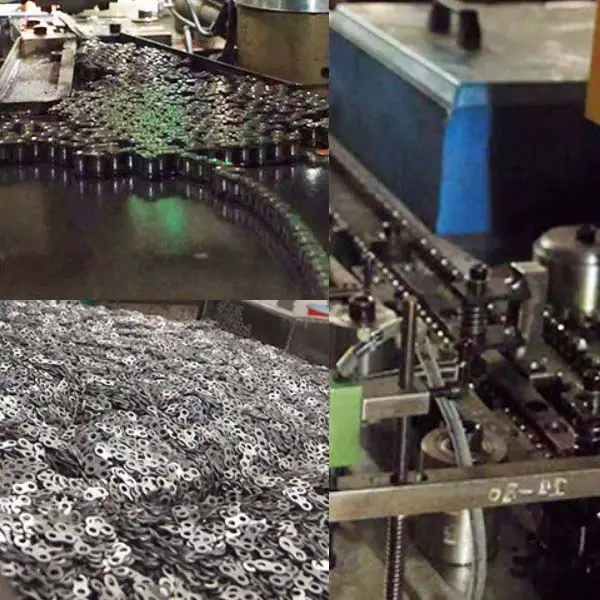
Engineering chains are designed to handle some degree of misalignment between sprockets. Misalignment can occur due to various factors such as improper installation, wear and elongation of the chain, or inaccuracies in the machinery. While some misalignment is inevitable in many industrial applications, excessive misalignment should be avoided to ensure optimal chain performance and longevity.
Here’s how engineering chains handle misalignment:
- Flexible Construction: Engineering chains are constructed with flexible components such as pins, rollers, and bushings. This design allows the chain to adapt to minor misalignments without putting excessive stress on the chain or sprockets.
- Articulating Joints: The articulating joints in the chain allow it to articulate smoothly around the sprockets, accommodating minor misalignment during the rotation. This helps reduce wear on the chain and sprockets.
- Tolerance for Misalignment: Manufacturers provide specifications for the allowable misalignment between sprockets. Engineering chains are designed to handle a certain level of misalignment within these tolerances without significantly affecting their performance.
- Proper Installation: Correct installation of the engineering chain is crucial to minimizing misalignment issues. Ensuring proper tension, alignment, and center-to-center distance between sprockets can help reduce misalignment and prolong chain life.
- Regular Maintenance: Regular maintenance, including chain inspection and lubrication, can help identify and address misalignment issues early on. Promptly correcting misalignment can prevent further damage and ensure efficient chain operation.
- Alignment Devices: In some cases, alignment devices or tools may be used during installation to ensure accurate alignment between the sprockets. These devices can help improve chain performance and reduce wear caused by misalignment.
It is essential to follow the manufacturer’s guidelines for chain installation, maintenance, and alignment to optimize the performance and service life of engineering chains. Addressing misalignment issues promptly and keeping the chain in proper working condition will contribute to the overall reliability and efficiency of the machinery or equipment in which the chain is used.
Can engineering chains be used in marine or underwater applications?
Yes, engineering chains can be used in marine or underwater applications under certain conditions. However, several factors need to be considered to ensure their reliable performance and longevity in such environments:
1. Corrosion Resistance: Marine and underwater environments expose chains to the risk of corrosion due to saltwater exposure. Therefore, it’s crucial to select engineering chains made from corrosion-resistant materials such as stainless steel or special coatings to prevent rust and deterioration.
2. Sealing and Lubrication: Proper sealing and lubrication are essential to protect the chain’s internal components from water ingress and corrosion. Sealed or encapsulated chain designs with suitable lubricants can help maintain smooth operation even in wet conditions.
3. Material Selection: The choice of materials for the chain and sprockets should consider not only corrosion resistance but also the ability to withstand marine environments’ unique challenges, such as exposure to marine organisms, debris, and changing temperatures.
4. Load Capacity: Marine and underwater applications may involve heavy loads, so the engineering chain must be selected based on the specific load requirements to ensure safe and reliable operation.
5. Water Depth and Pressure: The depth of the underwater application and the resulting pressure can affect the chain’s performance. Special considerations may be necessary for deep-sea applications to withstand higher pressures.
6. Environmental Regulations: Depending on the location, there may be specific environmental regulations regarding the materials used in marine applications to prevent pollution and protect marine life.
7. Maintenance and Inspection: Regular maintenance and inspection are critical for identifying and addressing any signs of wear, corrosion, or damage in the engineering chain. Timely maintenance can extend the chain’s lifespan and ensure safe operation.
Overall, with proper material selection, sealing, lubrication, and maintenance, engineering chains can be used effectively in marine or underwater applications, providing reliable power transmission and motion control in these challenging environments.
How does an engineering chain differ from a standard roller chain?
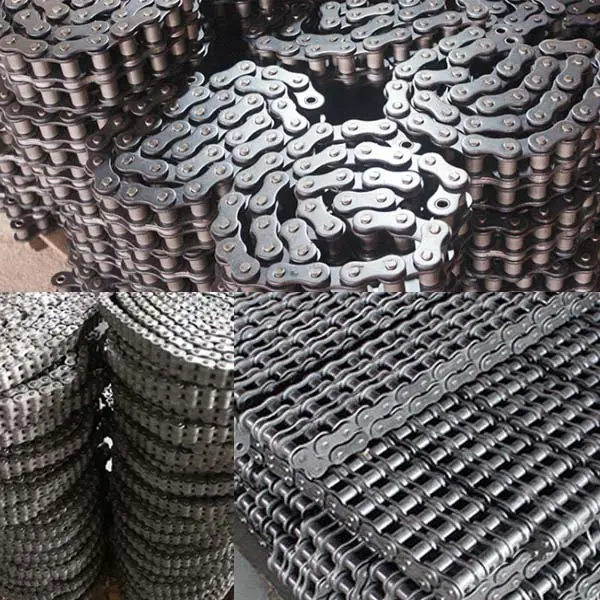
Engineering chains and standard roller chains share similarities in terms of their basic design, consisting of interconnected links that engage with sprockets for power transmission. However, there are key differences between the two types of chains:
- Application: Standard roller chains, also known as transmission chains, are primarily used for power transmission in industrial applications. They are commonly found in machinery, automotive, and other power transmission systems. On the other hand, engineering chains have a broader range of applications and are specifically designed for various industrial uses beyond pure power transmission.
- Design and Construction: Engineering chains are available in different configurations and materials to meet specific industrial needs. They come in various types like drag chains, apron chains, leaf chains, and more, each tailored for a particular application, such as material handling, lifting, or conveying. Standard roller chains have a more standardized design with cylindrical rollers, providing smooth motion in power transmission applications.
- Attachments: Engineering chains often feature attachments or extended pins that allow for the connection of specialized components or accessories. These attachments can be used for carrying loads, attaching products, or facilitating specific tasks in industrial processes. Standard roller chains, on the other hand, typically do not come with attachments.
- Load Capacity: Engineering chains are designed to handle a wide range of loads, including heavy loads, abrasive materials, and harsh environmental conditions. They are built to withstand the demands of rugged industrial settings. Standard roller chains are suitable for general power transmission applications and may not be as robust as engineering chains in challenging environments.
- Specialty Chains: Engineering chains include various specialty chains that cater to specific industries and applications, such as mining, agriculture, escalators, and more. Standard roller chains do not have the same diversity of specialized variants.
In summary, engineering chains are more versatile and adaptable, tailored to a broader range of industrial applications beyond power transmission. They offer a wider variety of designs, materials, and attachments to suit specific needs, making them suitable for demanding and specialized tasks in various industries.


editor by CX 2024-05-08