
Product Description
Wholesale ISO standard engineering new colored conveyor belts pom plastic roller chain
Advantages:
1.A complete range of specification
2.free design offer OEM & ODM
3.free sample available
4.professional service team
5.specialize CNC machining and injection over 10 years
6.Custom accept as per drawing or sample
POM (Polyformaldehyde)
POM (Full-name: Polyformaldehyde), is a engineering plastics of non-side-chain, high density, high crystalline and linear polymer, which is praised “Plastic Steel”, and has comprehensive excellent performances, such as: wear-resistance, high hardness, anti-impregnant, good rigidity (Tensile modulus of elasticity), chemical stability, isolation resistance and dimensional stability. POM has widely applied in Automobile industries, electronic and electric products, commodity, pipeline & fittings, exact apparatus and so on, which can be instead of the bronze, Zinc, tin and other metals.
Except POM-H, is often copolymerized with ethylene oxide together, in order to avoid the melting of POM material in the high temperature. POM-H has the better performances than POM-C in its high crystalline, mechanical strength and rigidity. And POM-C has the better performances than POM-H in its low melting point, temperature stability, fluxion characteristic and machining capability.
Father more, POM-H+PTFE, which is made from the Delrin POM Resin that maxed Teflon fiber symmetrically, has the low co-efficient of frication, good lubrication, wear-resistance, non-creepage resistance.
Automobile industries: POM has a large application in car industries, because the mechanical parts made by POM, which has the advantages of high mechanical strength, high hardness, good wear-resistance, low co-efficient of friction, easy to maintain, reducing cost and so on, can be used in cars instead of coppery half stalk and planet gear. It not only saving copper materials, but also improving service life. At the engine fuel system, components for hose valves and case cover of radiator, cooling fluid’s standby case, water valve, oil box’ cover, pump impeller, shell of gasification machine and accelerator pedal and so on.
Electronic and electric Industries: because of its lower power consuming, high dielectric strength and insulation resistance and electronic arc resistance, POM has widely applied in electronic and electric Industries, such as: shell of electronic spanner, shell of electronic scissors, shell of coal drilling machine ,handle of switch, parts also for phone, wireless recorder, video tape recorder, television, computer, electrograph, calculagraph, bracket of recorder tape and so on.
Agricultural machine: part of manual sprayer, joint and transport part of seeder, parts of milk machine, shell of irrigation and drainage, valve, joint and bush of water and so on.
Other field:
Pharmacy & packing Machine: transporting screw, planet gear, gear bar, chain wheel and cushion bar and so on.
Construction industries: water tap, window frame, wash pot, water tank, pulley for portiere, shell of water meter and tie-in of water pipe.
Color:White,Black,Natural,Rice Yellow brown and so on.
Size:1000X2000X(Thickness:1-200mm),1220X2440X(Thickness:1-200mm)
600X1200X(Thickness:1-200mm)
| Model |
inejction POM conveyor chain |
| Material |
POM / Nylon/ PVC or customized |
| Diameter | 1-250mm or customized |
| Length | 500mm,1000mmor customized |
| Color | Natural,White,Black,ect. |
| OEM & ODM | Yes |
| Certification | ISO9001,SGS,FDA,RoHS,Test Report,ect. |
| Free Sample | Yes |
| Density | 1.6g/ cm2 |
| Shape | sheet, rod, tube, gear, pulley, guide rail……or according to your demand |
| Packing | Plastic bags,Cartons,Wodden case,Pallet,Container,ect. |
| Advantage | One stop procurement |
Product Photo
| Material: | Plastic |
|---|---|
| Structure: | Leaf Chain |
| Surface Treatment: | Polishing |
| Chain Size: | 1/2"*3/32" |
| Feature: | Fire Resistant, Heat Resistant |
| Certificate: | ISO9001: 2008, Test Report |
| Customization: |
Available
| Customized Request |
|---|
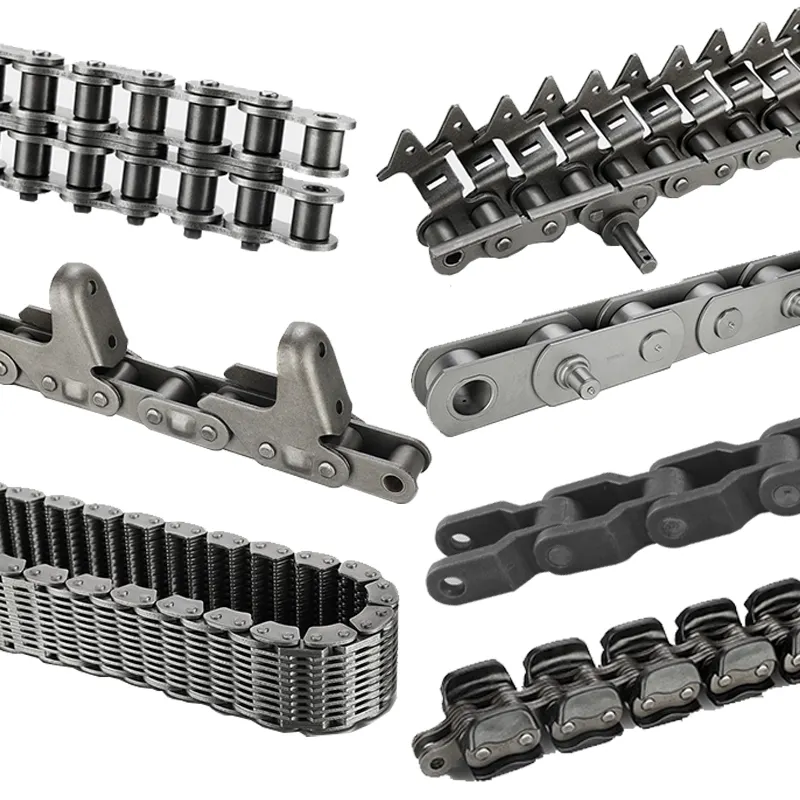
Can engineering chains be used in high-temperature environments?
Yes, engineering chains can be used in high-temperature environments, but their performance depends on the type of material they are made of and the specific temperature conditions they are exposed to. Here are some considerations for using engineering chains in high-temperature environments:
- Material Selection: Chains made from heat-resistant materials, such as stainless steel or special alloy steels, are suitable for high-temperature applications. These materials offer increased resistance to heat, oxidation, and corrosion.
- Lubrication: Proper lubrication is critical when using engineering chains in high-temperature environments. High-temperature lubricants that can withstand the specific temperature range are essential to reduce friction and wear between the chain’s components.
- Heat Dissipation: In high-temperature environments, the heat generated by the chain’s operation needs to be dissipated effectively to prevent excessive temperature rise. Adequate ventilation or cooling mechanisms may be required to maintain the chain within a safe operating temperature range.
- Chain Design: Chains intended for high-temperature use may have specific design features that enhance their heat resistance and performance. These design modifications can include heat-resistant coatings, special alloys, or heat-treated components.
- Operating Conditions: The operating conditions, such as the temperature range and the duration of exposure to high temperatures, should be carefully evaluated to ensure the chain’s material and lubrication are suitable for the specific application.
- Inspections and Maintenance: Regular inspections and maintenance are crucial to monitor the chain’s condition and performance in high-temperature environments. Any signs of wear, elongation, or damage should be addressed promptly to prevent potential failures.
When properly selected, lubricated, and maintained, engineering chains made from heat-resistant materials can reliably operate in high-temperature environments. It’s essential to consult with chain manufacturers or experts to determine the most suitable chain type and material for a specific high-temperature application.
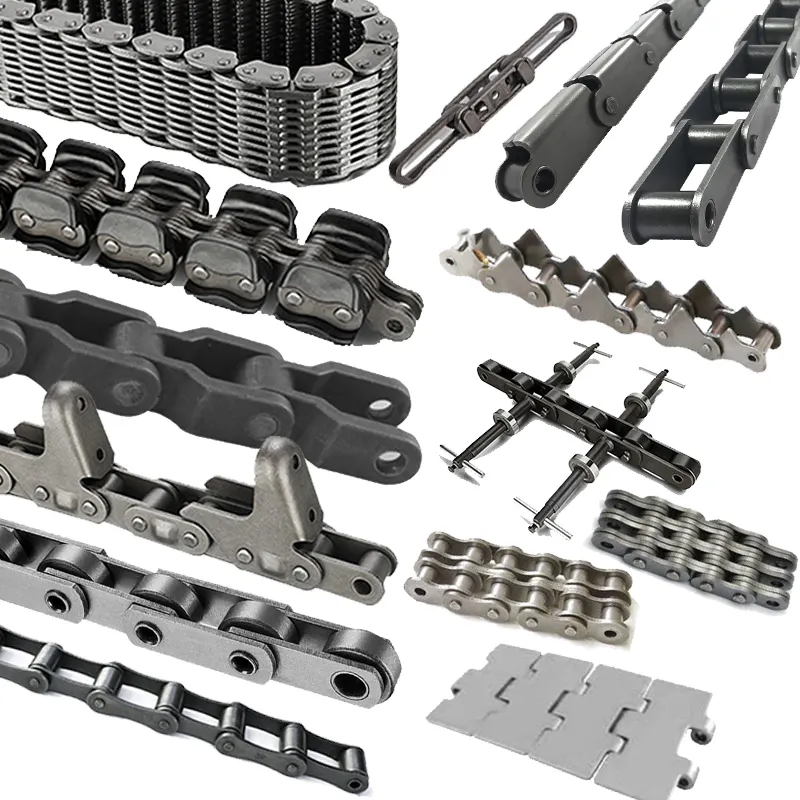
What are the benefits of using an engineering chain over other power transmission methods?
Engineering chains offer several advantages over other power transmission methods, making them a preferred choice in various industrial applications:
- High Strength: Engineering chains are designed to handle heavy loads and high torque, making them suitable for demanding applications that require robust and reliable power transmission.
- Wide Range of Sizes: These chains are available in a wide range of sizes and configurations, allowing for flexibility in design and accommodating various application requirements.
- Durable and Long-Lasting: When properly maintained, engineering chains have a long service life, reducing the need for frequent replacements and minimizing downtime in industrial operations.
- Adaptable to Harsh Environments: Engineering chains are capable of operating in harsh conditions, including dusty, dirty, or corrosive environments, without compromising their performance.
- Shock Load Resistance: The design of engineering chains allows them to handle sudden impact forces and shock loads, which can occur in certain industrial processes.
- Cost-Effective: Engineering chains often provide a cost-effective solution for power transmission compared to other methods, especially in high-load applications.
- Simple Installation: With proper alignment and tensioning, engineering chains are relatively easy to install, reducing installation time and labor costs.
- Bi-Directional Power Transmission: Engineering chains can transmit power in both forward and reverse directions, making them suitable for applications requiring bidirectional motion.
- Low Maintenance: Regular maintenance, such as lubrication and inspection, can keep engineering chains in good working condition, reducing overall maintenance costs.
- Reduction of Noise and Vibration: When adequately lubricated and aligned, engineering chains can operate quietly and with minimal vibration, contributing to a more comfortable and safer working environment.
Despite their many advantages, it’s essential to consider the specific requirements of each application before selecting an engineering chain. Factors such as load capacity, speed, environmental conditions, and space constraints should be taken into account to ensure the chain’s optimal performance and longevity.
In summary, engineering chains are a versatile and reliable power transmission method, offering a range of benefits that make them well-suited for use in various industrial settings.
Are there any special considerations for lubricating engineering chains?
Yes, proper lubrication is essential for the optimal performance and longevity of engineering chains. Here are some special considerations to keep in mind when lubricating engineering chains:
1. Lubricant Selection: Choose the appropriate lubricant based on the chain’s operating conditions, speed, load, and environmental factors. Different applications may require different types of lubricants, such as oil-based or grease-based lubricants.
2. Correct Lubrication Amount: Applying the right amount of lubricant is crucial. Insufficient lubrication can lead to increased friction and wear, while excessive lubrication can attract contaminants and cause the chain to sling off excess grease or oil.
3. Regular Lubrication: Implement a regular lubrication schedule to ensure the chain is consistently lubricated. Frequent lubrication can help reduce friction and wear, extending the chain’s service life.
4. Lubrication Method: The method of lubrication will depend on the chain design and accessibility. Some chains have built-in lubrication systems, while others may require manual lubrication using oilers or grease guns.
5. Cleanliness: Before lubrication, make sure the chain is clean and free from debris. Cleaning the chain helps prevent abrasive particles from becoming trapped in the lubricant, which could accelerate wear.
6. Avoid Contaminants: Keep lubricants and lubrication equipment free from contaminants to maintain the purity and effectiveness of the lubricant.
7. Environmental Factors: Consider the operating environment when selecting a lubricant. High temperatures, moisture, and harsh chemicals can affect the lubricant’s performance, so choose one that can withstand these conditions.
8. Reapplication: In some applications, the lubricant may wear off or become contaminated more quickly. Regularly monitor the chain’s lubrication condition and reapply lubricant as needed.
9. Training and Safety: Ensure that personnel involved in the lubrication process are properly trained in handling lubricants safely and efficiently.
By following these special considerations, you can optimize the performance and reliability of engineering chains through effective lubrication, reducing wear and extending the chain’s useful life in various industrial applications.


editor by CX 2023-09-07