
Product Description
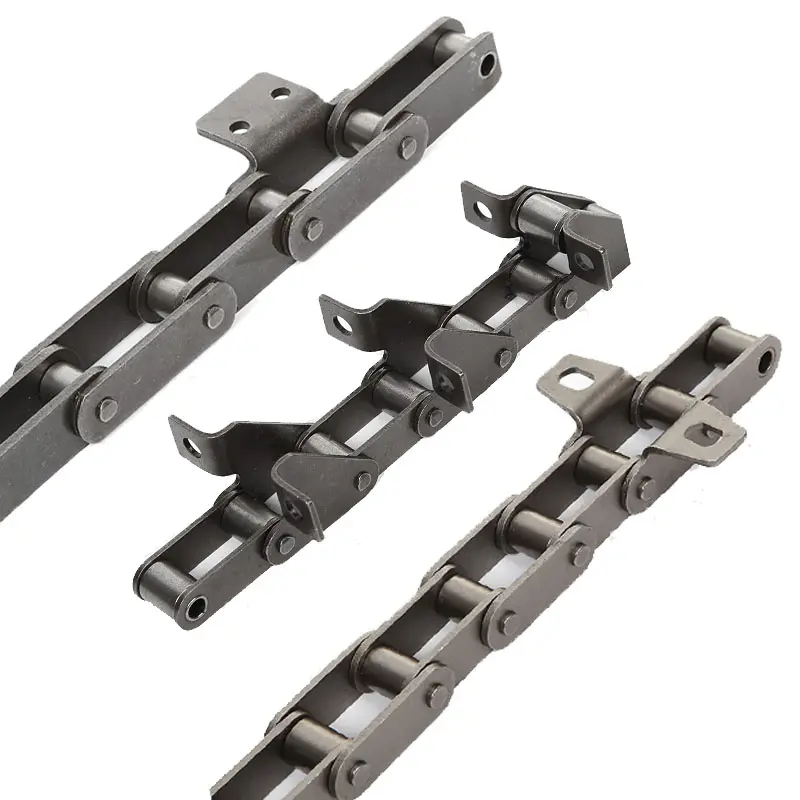
| Product name | Agricultural Chain With Attachment |
| Materials Available | 1. Stainless Steel: SS304, SS316, etc |
| 2. Alloy Steel: 45Mn, 42CrMo, etc | |
| 3. OEM according to your request | |
| Surface Treatment | Shot peening, Polishing, Oxygenation, Blackening, Zinc-plated, Nickel-plated, Anodized, etc. |
| Characteristic | Fire Resistant, Oil Resistant, Heat Resistant |
| Application | Agricultural machine, Corn harvester, wheat harvester |
| Design criterion | ISO DIN ANSI & Customer’s Drawing |
| Size | Customer’s Drawing & ISO standard |
| Package | Wooden Case / Container and pallet, or made-to-order |
| Advantage | First quality, best service, competitive price, fast delivery |
| Delivery Time | 20 days for samples. 45 days for official order. |
Our company
Wolff Chain Co. is 1 of the professional chain manufacturers in China. We focus on reseaching, manufacturing and trading of the chain drive with famous brands — “DOVON” and “DECHO”. We supply OEM services for many famous enterprises such as SUZUKI, XIHU (WEST LAKE) DIS., FAW, AGCO, JUMING as well.
Wolff mainly producing the Transmission chains,Conveyor chains,Dragging Chains,Silent chains,Leaf chains,Roller chains,Special chain and many other series of chain products. Our technicians a have improved the chains quality to the world-level. High quality material selection, powerful and precise heat-treatment technology and excellent assembly methods ensure Wolff chains meet the tough and strict requirements for machines and vehicles.
All of our products completely conform to the international standard such as ISO\DIN\ANSI\BS\JIS, etc. Wolff has been successfully certified by ISO9001 Quality Management System,SGS inspection and BV inspection. Wolff chains can be widely applied to many industries including automobile, motorcycle, forklift, wood processing machine, constructure machine, packing machine, food machine,tobacco machine and agricultural equipments. Wolff chains are popular in America,South America,Europe,Middle East, South East Asia and Africa markets.
Our workshop
Welcome to our exhibition
FAQ
Q1. What is your terms of packing?
A: Generally, we pack our goods in single color box. If you have special request about packing, pls negotiate with us in advance, we can pack the goods as your request.
Q2. What is your terms of payment?
A: T/T 30% as deposit, and 70% before delivery. We’ll show you the photos of the products and packages
before you pay the balance. Other payments terms, pls negotiate with us in advance, we can discuss.
Q3. What is your terms of delivery?
A: EXW, FOB, CFR, CIF.
Q4. How about your delivery time?
A: Generally, it will take 25 to 30 days after receiving your advance payment. The specific delivery time depends
on the items and the quantity of your order.
Q5. Can you produce according to the samples?
A: Yes, we can produce by your samples or technical drawings. We can build the molds and fixtures.
Q6. What is your sample policy?
A: We can supply the sample if we have ready parts in stock, but the customers have to pay the sample cost and
the courier cost.We welcome sample order.
Q7. Do you test all your goods before delivery?
A: Yes, we have 100% test before delivery
Q8: How do you make our business long-term and good relationship?
1. We keep good quality and competitive price to ensure our customers benefit ;
2. We respect every customer as our friend and we sincerely do business and make friends with them,
no matter where they come from.
| Type: | Rake |
|---|---|
| Usage: | Agricultural Products Processing, Farmland Infrastructure, Tillage, Harvester, Planting and Fertilization, Grain Threshing, Cleaning and Drying |
| Material: | Carbon Steel |
| Power Source: | Gasoline |
| Weight: | 5lbs |
| with: | Attachment |
| Customization: |
Available
| Customized Request |
|---|
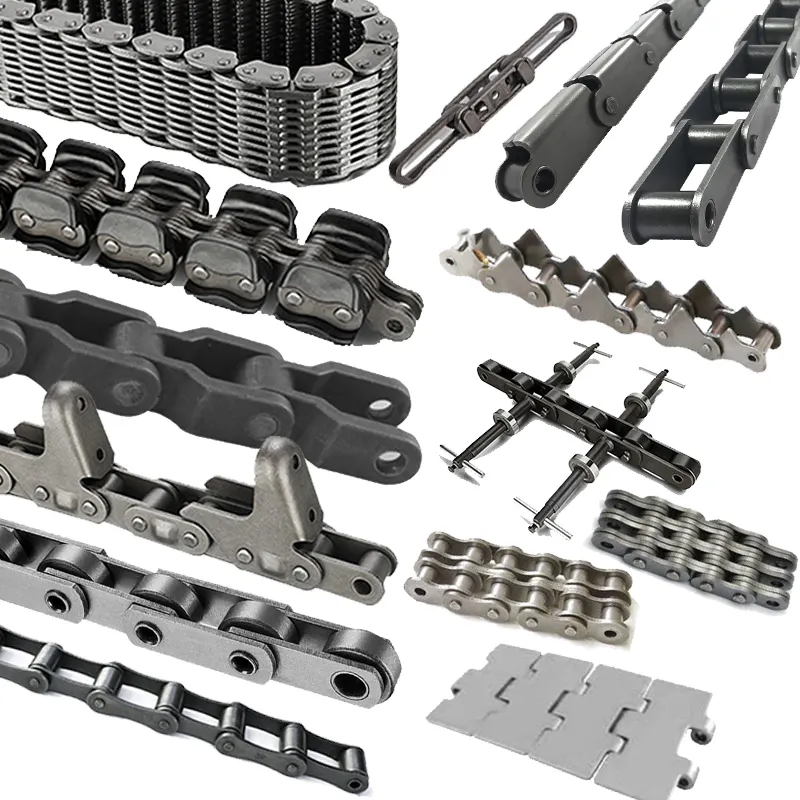
What are the benefits of using an engineering chain in construction machinery?
Using an engineering chain in construction machinery offers several benefits due to its robust design, durability, and reliability. Here are some advantages of incorporating engineering chains in construction machinery:
- High Load Capacity: Construction machinery often deals with heavy loads and tough working conditions. Engineering chains are specifically designed to handle high loads, making them well-suited for applications in construction equipment.
- Tough and Durable: Construction sites can be harsh environments with exposure to dust, dirt, and debris. Engineering chains are built to withstand such conditions, ensuring a longer service life and reducing the need for frequent replacements.
- Power Transmission: Engineering chains are excellent for power transmission in construction machinery, transferring torque efficiently from the drive to various components of the equipment, such as wheels, tracks, and conveyors.
- Versatility: Engineering chains are available in various types and sizes, offering versatility in design and application. They can be customized to fit specific construction machinery requirements.
- Reduced Maintenance: Their robust construction and resistance to wear minimize the need for frequent maintenance, leading to reduced downtime and increased productivity on construction sites.
- Shock Absorption: Construction machinery often experiences sudden shocks and impacts. Engineering chains have the ability to absorb shock loads, preventing damage to the equipment and ensuring smooth operation.
- Corrosion Resistance: Some construction sites may have exposure to moisture or corrosive substances. Engineering chains made from corrosion-resistant materials, such as stainless steel, can withstand these conditions and maintain their performance over time.
- Cost-Effective: While engineering chains may have a higher upfront cost compared to standard chains, their long-lasting nature and reduced maintenance requirements make them cost-effective in the long run.
Overall, engineering chains play a vital role in improving the efficiency, reliability, and durability of construction machinery. They contribute to the smooth functioning of various components, ensuring that construction equipment can handle heavy workloads and challenging conditions with ease.
What are the benefits of using an engineering chain over other power transmission methods?
Engineering chains offer several advantages over other power transmission methods, making them a preferred choice in various industrial applications:
- High Strength: Engineering chains are designed to handle heavy loads and high torque, making them suitable for demanding applications that require robust and reliable power transmission.
- Wide Range of Sizes: These chains are available in a wide range of sizes and configurations, allowing for flexibility in design and accommodating various application requirements.
- Durable and Long-Lasting: When properly maintained, engineering chains have a long service life, reducing the need for frequent replacements and minimizing downtime in industrial operations.
- Adaptable to Harsh Environments: Engineering chains are capable of operating in harsh conditions, including dusty, dirty, or corrosive environments, without compromising their performance.
- Shock Load Resistance: The design of engineering chains allows them to handle sudden impact forces and shock loads, which can occur in certain industrial processes.
- Cost-Effective: Engineering chains often provide a cost-effective solution for power transmission compared to other methods, especially in high-load applications.
- Simple Installation: With proper alignment and tensioning, engineering chains are relatively easy to install, reducing installation time and labor costs.
- Bi-Directional Power Transmission: Engineering chains can transmit power in both forward and reverse directions, making them suitable for applications requiring bidirectional motion.
- Low Maintenance: Regular maintenance, such as lubrication and inspection, can keep engineering chains in good working condition, reducing overall maintenance costs.
- Reduction of Noise and Vibration: When adequately lubricated and aligned, engineering chains can operate quietly and with minimal vibration, contributing to a more comfortable and safer working environment.
Despite their many advantages, it’s essential to consider the specific requirements of each application before selecting an engineering chain. Factors such as load capacity, speed, environmental conditions, and space constraints should be taken into account to ensure the chain’s optimal performance and longevity.
In summary, engineering chains are a versatile and reliable power transmission method, offering a range of benefits that make them well-suited for use in various industrial settings.
How do engineering chains handle shock loads and impact forces?
Engineering chains are designed to handle a range of loads, including shock loads and impact forces, encountered in various industrial applications. Their ability to withstand these forces depends on several factors:
1. Material Selection: High-quality engineering chains are often made from robust materials such as alloy steel or stainless steel. These materials provide excellent strength and durability, allowing the chain to handle shock loads without permanent deformation or failure.
2. Chain Design: The design of engineering chains plays a crucial role in their ability to handle shock loads. The chain’s structure, such as the shape and size of its components, determines its load-bearing capacity and resistance to impact forces.
3. Heat Treatment: Some engineering chains undergo specific heat treatment processes to enhance their hardness and toughness. Heat-treated chains can better withstand shock loads and impact forces, making them suitable for demanding applications.
4. Fatigue Resistance: Engineering chains are designed to have good fatigue resistance, which means they can endure repeated loading cycles without failure. This property is essential for withstanding impact forces that occur intermittently in certain applications.
5. Proper Installation and Tensioning: Correct installation and appropriate tensioning of the chain are essential to ensure optimal performance under shock loads. Improper tensioning may lead to excessive stress on the chain and premature failure.
6. Chain Speed: The speed at which the chain operates can influence its ability to handle shock loads. High-speed operation may generate additional forces, so the chain must be rated to withstand these forces without exceeding its limits.
7. Regular Maintenance: Proper maintenance is crucial for extending the life of engineering chains subjected to shock loads and impact forces. Regular inspections, lubrication, and replacement of worn components are essential to keep the chain in optimal condition.
Overall, engineering chains are engineered to handle shock loads and impact forces in industrial environments. However, it is crucial to choose the right chain type, size, and material for the specific application and to follow proper installation and maintenance practices to ensure reliable and safe operation under varying load conditions.


editor by CX 2023-10-19