
Product Description
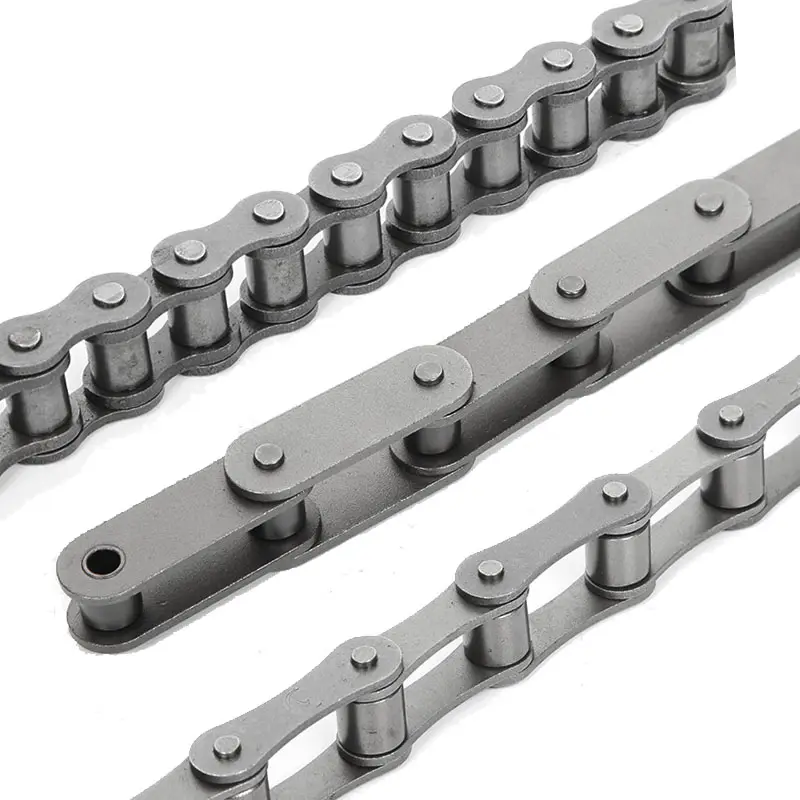
Our roller chain size chart shows all the ANSI & Metric(ISO/DIN) standard single-pitch and double-pitch chain sizes for making easy selections when it comes to sizing a chain!
Solid rollers enhance rotation on the bushing while reducing impact loads on the sprocket tooth during operation.
All components are heat treated to achieve maximum strength and greater wear resistance.
Pre-loaded during the manufacturing process to minimize the initial elongation.
Hot dipped lubrication ensures 100% lubrication of all chain components to extend wear life and reduce maintenance costs.
| Usage: | Transmission Chain, Conveyor Chain |
|---|---|
| Material: | Alloy/Carbon Steel |
| Surface Treatment: | Polishing |
| Feature: | Heat Resistant |
| Chain Size: | Standard Size, Heavy Duty |
| Structure: | Roller Chain |
| Samples: |
US$ 10/Meter
1 Meter(Min.Order) | |
|---|
| Customization: |
Available
| Customized Request |
|---|
Can engineering chains be used in overhead or inverted applications?
Yes, engineering chains can be used in both overhead and inverted applications, provided they are properly selected and installed. These types of applications are common in various industries, including material handling, automotive, and food processing. Engineering chains are versatile and well-suited for such applications due to their robust construction, flexibility, and ability to handle heavy loads.
Overhead applications involve suspending the chain from overhead beams or structures, while inverted applications require the chain to run on the underside of the conveyor or equipment. Some factors to consider when using engineering chains in these applications include:
- Corrosion Resistance: For overhead applications in outdoor environments or areas with exposure to moisture, it is essential to use engineering chains made from corrosion-resistant materials, such as stainless steel, to prevent rust and ensure longevity.
- Lubrication: Proper and regular lubrication is crucial for chains in both overhead and inverted applications to reduce friction, wear, and noise levels. Lubrication also helps protect the chain from contaminants and moisture.
- Load Capacity: Ensure that the engineering chain selected has a sufficient load capacity to handle the weight of the conveyed materials or equipment in the application.
- Installation: Proper installation is critical for the smooth operation of the chain in overhead and inverted applications. Correct tensioning and alignment will help prevent premature wear and improve overall performance.
- Chain Speed: Consider the speed at which the chain will be running in the application, as higher speeds may require additional considerations in terms of lubrication and wear.
By taking these factors into account and following the manufacturer’s guidelines for installation, lubrication, and maintenance, engineering chains can be used effectively in overhead and inverted applications. They offer reliable and efficient power transmission and material handling solutions, making them valuable components in a wide range of industrial processes and systems.
How do engineering chains handle angular misalignment between sprockets?
Engineering chains are designed to handle a certain degree of angular misalignment between sprockets. Angular misalignment occurs when the rotational axes of the driving and driven sprockets are not perfectly parallel, leading to an angle between them. While it is essential to minimize misalignment to prevent excessive wear and premature failure, some level of misalignment tolerance is built into engineering chains to accommodate real-world installation variations.
When angular misalignment exists, the chain’s side plates and rollers are designed to articulate and adjust to the varying angles between the sprockets. This flexibility allows the chain to smoothly engage and disengage from the sprocket teeth without binding or jamming. However, it’s important to note that excessive misalignment can still cause accelerated wear, noise, and reduced efficiency in the chain drive system.
To ensure optimal performance and longevity, it is recommended to keep angular misalignment within the manufacturer’s specified limits. These limits can vary depending on the chain size, type, and application. When installing an engineering chain, it’s crucial to align the sprockets as accurately as possible and use alignment tools if necessary.
In applications where angular misalignment is unavoidable, special chain types or accessories, such as chain tensioners or idler sprockets, can be used to help compensate for the misalignment and improve overall system performance.
In summary, engineering chains are designed to handle a certain degree of angular misalignment between sprockets, but it is essential to follow the manufacturer’s guidelines and maintain proper alignment to ensure reliable and efficient operation of the chain drive system.
Can engineering chains be used in high-speed applications?
Yes, engineering chains can be used in high-speed applications, but their suitability depends on various factors. While some engineering chains are designed to handle high-speed operation, others may not be suitable for such applications. Here are some considerations:
1. Chain Type: Different types of engineering chains have varying capabilities when it comes to high-speed operation. For example, roller chains are commonly used in industrial applications and can handle moderate to high speeds efficiently. On the other hand, conveyor chains or specialty chains may have limitations on speed due to their design and intended use.
2. Manufacturer Specifications: Check the manufacturer’s specifications and recommendations for the engineering chain you plan to use. Manufacturers often provide maximum allowable speeds for their chains based on factors such as chain size, material, and construction.
3. Lubrication and Maintenance: Proper lubrication and maintenance are critical for high-speed applications. Adequate lubrication reduces friction and wear, allowing the chain to operate smoothly at higher speeds. Regular maintenance ensures that the chain remains in good condition and minimizes the risk of unexpected failures.
4. Load and Tension: High-speed applications can place additional loads and tension on the engineering chain. It is essential to ensure that the chain can handle the increased loads and tension without stretching excessively or experiencing premature wear.
5. Environmental Conditions: Consider the environmental factors that may affect the chain’s performance at high speeds. Temperature, humidity, and the presence of contaminants can impact the chain’s wear and durability.
6. Safety Considerations: High-speed applications require careful consideration of safety measures. Ensure that all safety guidelines and regulations are followed to prevent accidents or injuries resulting from chain failure.
In summary, engineering chains can be used in high-speed applications, but it is essential to select the appropriate chain type and ensure proper maintenance and lubrication. Consulting with chain manufacturers or experts can help you determine the most suitable engineering chain for your specific high-speed application, ensuring safe and reliable operation.


editor by CX 2023-08-14