
Product Description
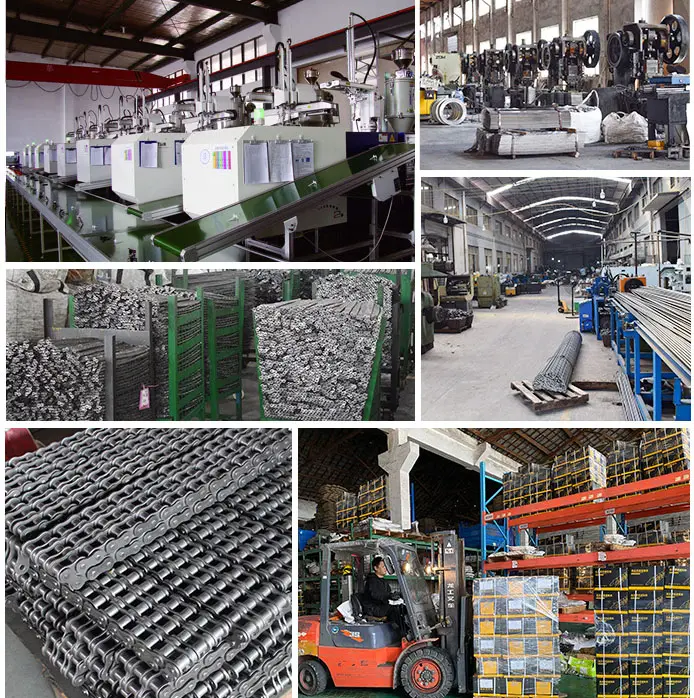
XIHU (WEST LAKE) DIS.HUA Chain Group is the most professional manufacturer of power transmission in China, manufacturing roller chains, industry sprockets, motorcycle sprockets, casting sprockets, different type of couplings, pulleys, taper bushes, locking devices, gears, shafts, CNC precision parts and so on. We have passed ISO9001, ISO14001, TS16949 such quality and enviroment certification
We adopt good quality raw material and strict with DIN, ANSI, JIS standard ect, We have professional quality conrol team, complet equipment, advanaced technology. In 1999, Xihu (West Lake) Dis.hua obtained ISO9001 Certificate of Quality Assurance System, besides, the company also devotes itselt o environmental protection, In2002, it also obtained ISO14001 Certificate of Environment Management System.
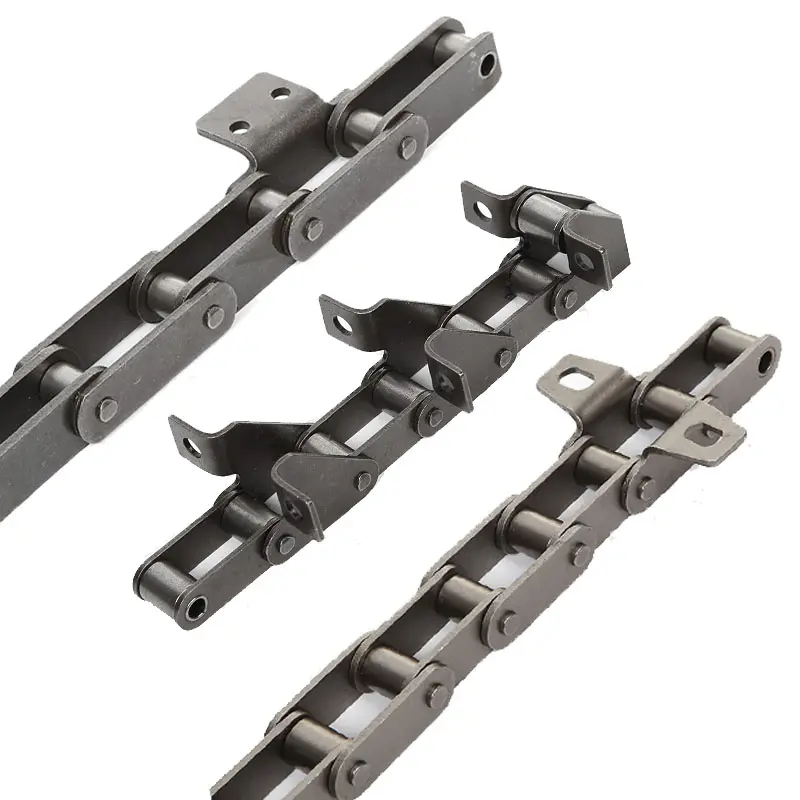
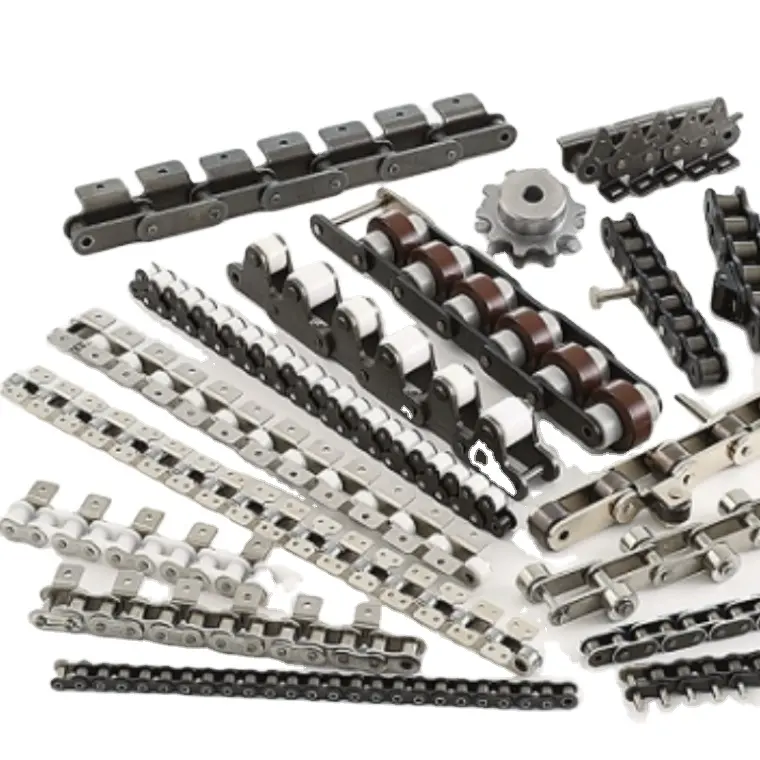
Engineering Bush Chains with Attachments
Material: Alloy Steel
Surface Treatment: Shot Peening / Blacking / Blueing
Main Application: Industry machine
ANSI/XIHU (WEST LAKE) DIS.HUA CHAIN NO. PITCH
S102B 101.6
S110 152.4
S111 120.9
S131 78.11
S150 153.67
S188 66.27
S856 152.4
S102.5 102.36
S110F1 152.4
S111F1 120.9
| ANSI Chain No. | Xihu (West Lake) Dis.hua Chain No. | Pitch(mm) | Distance of 2 holes(mm) | Width of attachment(mm) | F(mm) | W(mm) | h4 | Diameter of hole d4(mm) | Plate thickness (mm) |
| S102B | 101.60 | 44.50 | 69.9 | 134.90 | 180.80 | 25.40 | 10.2 | 9.7 | |
| S110 | 152.40 | 44.50 | 89.6 | 134.90 | 180.80 | 25.40 | 10.2 | 9.7 | |
| S111 | 120.90 | 58.70 | 92.7 | 158.80 | 210.80 | 38.10 | 13.5 | 9.7 | |
| S131 | 78.11 | 38.10 | 73.9 | 104.60 | 157.00 | 25.40 | 13.5 | 9.7 | |
| S150 | 153.67 | 69.90 | 108.7 | 190.50 | 249.40 | 47.80 | 13.5 | 12.7 | |
| S188 | 66.27 | 31.80 | 54.6 | 106.40 | 131.60 | 20.60 | 8.6 | 6.4 | |
| S856 | 152.40 | 63.50 | 103.1 | 184.20 | 241.30 | 47.80 | 16.8 | 12.7 | |
| S102.5 | 102.36 | 44.45 | 69.0 | 136.53 | 163.51 | 28.58 | 9.5 | 9.5 | |
| S110F1 | 152.40 | 44.45 | 88.9 | 134.94 | 165.10 | 27.78 | 10.3 | 9.5 | |
| S111F1 | 120.90 | 58.70 | 87.5 | 158.75 | 196.85 | 38.10 | 13.7 | 9.5 |
/* January 22, 2571 19:08:37 */!function(){function s(e,r){var a,o={};try{e&&e.split(“,”).forEach(function(e,t){e&&(a=e.match(/(.*?):(.*)$/))&&1
| Usage: | Transmission Chain |
|---|---|
| Material: | Alloy/Carbon Steel |
| Color: | Solid Color |
| Donghua Chain No: | S102b S110 S111 S131…. |
| Pitch: | 101.6 152.4 120.9 78.11… |
| Structure (for Chain): | Roller Chain |
| Customization: |
Available
| Customized Request |
|---|
Can engineering chains be used in agricultural machinery and equipment?
Yes, engineering chains are commonly used in various agricultural machinery and equipment applications. Their robust design and ability to handle heavy loads make them well-suited for the demanding and often harsh conditions in the agricultural industry. Here are some examples of how engineering chains are used in agriculture:
- Combine Harvesters: Engineering chains are utilized in combine harvesters to drive components like the cutter head, reel, and auger. These chains are essential for efficient harvesting and grain collection.
- Tractors: In tractors, engineering chains are employed in power take-off (PTO) systems to transfer power from the engine to different agricultural implements, such as plows, mowers, and tillers.
- Balers: Engineering chains are used in balers to compress and bind crops into bales, facilitating easy storage and transport.
- Seeders and Planters: These machines use engineering chains to distribute seeds or plants evenly in the field, ensuring proper crop spacing and optimal growth.
- Grain Handling Equipment: Engineering chains are integral in grain handling equipment, including bucket elevators, grain conveyors, and grain elevators, facilitating the efficient movement and storage of harvested crops.
The agricultural environment can be challenging, with factors such as dust, debris, and varying weather conditions. Engineering chains used in agricultural machinery are often designed with additional protection against contaminants and corrosion to ensure reliable performance over extended periods.
When selecting engineering chains for agricultural applications, it’s essential to consider factors like load capacity, environmental conditions, maintenance requirements, and the specific needs of each machine. Regular inspection and proper lubrication are crucial to maintain the chains’ performance and extend their service life in agricultural machinery.
Can engineering chains be used in low-temperature or cryogenic environments?
Yes, engineering chains can be used in low-temperature or cryogenic environments with appropriate material selection and lubrication. When operating in extremely cold conditions, standard chain materials may become brittle and prone to failure. However, by using special materials and lubricants designed for low temperatures, engineering chains can maintain their performance and reliability.
In cryogenic applications, such as in the aerospace, medical, or scientific industries, where temperatures can reach extremely low levels (typically below -150°C or -238°F), standard steel chains may not be suitable. In such cases, engineers often opt for materials like stainless steel, nickel-plated steel, or other alloys that can withstand cryogenic temperatures without losing their mechanical properties.
Lubrication is another critical consideration in low-temperature environments. Conventional lubricants may freeze or become less effective at extremely cold temperatures, leading to increased friction and wear. Therefore, special lubricants that remain fluid at low temperatures, such as synthetic oils or greases designed for cryogenic use, should be applied to ensure smooth chain operation and reduce wear.
In summary, engineering chains can be used in low-temperature or cryogenic environments, provided that the appropriate materials and lubricants are chosen for the specific application. By selecting the right chain and ensuring proper lubrication, the performance and service life of the engineering chain can be maintained even in extreme cold conditions.
What are the maintenance requirements for engineering chains?
Maintaining engineering chains is essential to ensure their longevity, reliable performance, and safe operation in industrial applications. The following are key maintenance requirements for engineering chains:
1. Regular Inspection: Conduct routine visual inspections of the chain to check for signs of wear, corrosion, or damage. Look for elongation, bent or broken links, and worn sprocket engagement areas.
2. Lubrication: Proper and timely lubrication is crucial for reducing friction and wear between chain components. Lubricate the chain using a suitable lubricant as recommended by the manufacturer.
3. Tension Adjustment: Check and adjust the chain’s tension regularly to maintain the correct amount of slack. Proper tension ensures efficient power transmission and minimizes stress on the chain and sprockets.
4. Cleaning: Keep the chain clean and free from debris, dirt, and contaminants that may accelerate wear and corrosion. Use appropriate cleaning methods and solutions that do not damage the chain’s surface.
5. Replace Worn Components: Replace any worn or damaged components, such as chain links or sprockets, promptly to prevent further damage and potential chain failure.
6. Avoid Overloading: Do not subject the engineering chain to loads exceeding its capacity. Overloading can lead to premature wear and failure.
7. Environmental Considerations: Consider the environment in which the chain operates. In corrosive or harsh environments, choose chains with appropriate coatings or materials to resist corrosion.
8. Follow Manufacturer’s Recommendations: Adhere to the manufacturer’s maintenance guidelines and recommended service intervals specific to the engineering chain model and application.
9. Training and Safety: Ensure that personnel handling the chain are properly trained in maintenance procedures and safety protocols.
10. Record Keeping: Maintain detailed records of maintenance activities, inspections, and replacements to track the chain’s condition and performance over time.
By following these maintenance requirements, industrial operators can extend the life of engineering chains, prevent unplanned downtime, and ensure safe and efficient operation in their respective applications.


editor by CX 2024-04-03