
Product Description
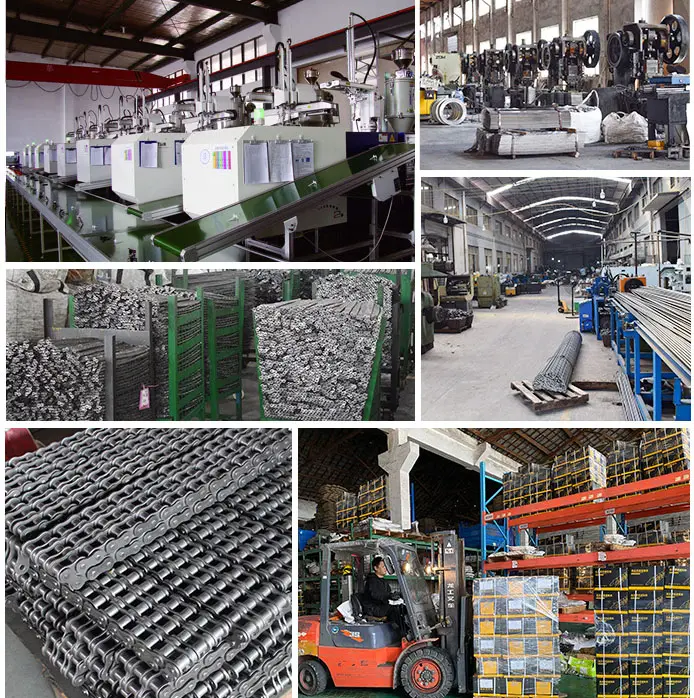
XIHU (WEST LAKE) DIS.HUA Chain Group is the most professional manufacturer of power transmission in China, manufacturing roller chains, industry sprockets, motorcycle sprockets, casting sprockets, different type of couplings, pulleys, taper bushes, locking devices, gears, shafts, CNC precision parts and so on. We have passed ISO9001, ISO14001, TS16949 such quality and enviroment certification
We adopt good quality raw material and strict with DIN, ANSI, JIS standard ect, We have professional quality conrol team, complet equipment, advanaced technology. In 1999, Xihu (West Lake) Dis.hua obtained ISO9001 Certificate of Quality Assurance System, besides, the company also devotes itselt o environmental protection, In2002, it also obtained ISO14001 Certificate of Environment Management System.
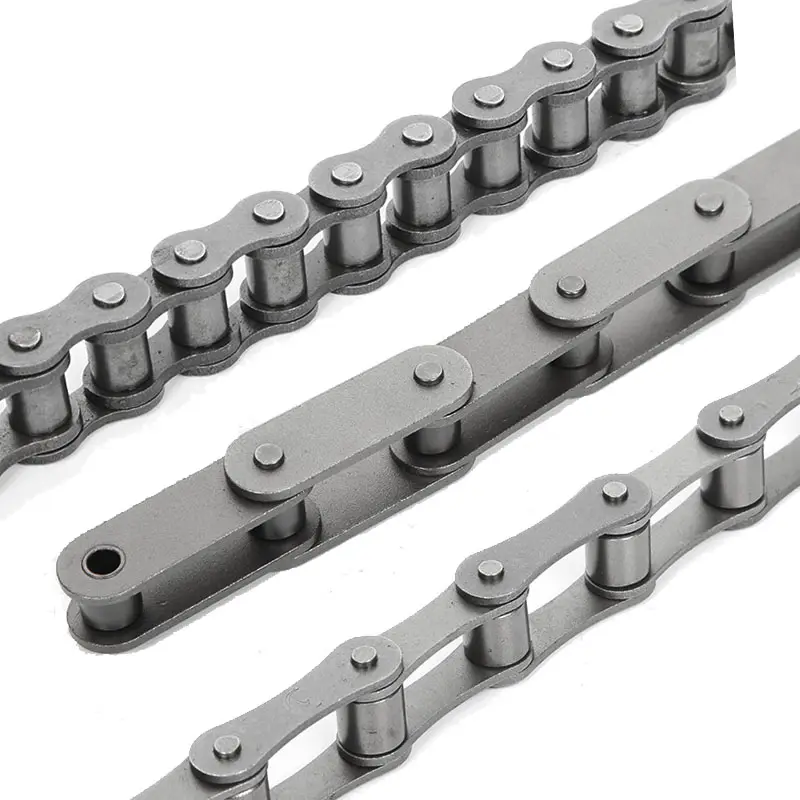
Engineering Bush Chains with Attachments
Material: Alloy Steel
Surface Treatment: Shot Peening / Blacking / Blueing
Main Application: Industry machine
ANSI/XIHU (WEST LAKE) DIS.HUA CHAIN NO. PITCH
S102B 101.6
S110 152.4
S111 120.9
S131 78.11
S150 153.67
S188 66.27
S856 152.4
S102.5 102.36
S110F1 152.4
S111F1 120.9
| ANSI Chain No. | Xihu (West Lake) Dis.hua Chain No. | Pitch(mm) | Distance of 2 holes(mm) | Width of attachment(mm) | F(mm) | W(mm) | h4 | Diameter of hole d4(mm) | Plate thickness (mm) |
| S102B | 101.60 | 44.50 | 69.9 | 134.90 | 180.80 | 25.40 | 10.2 | 9.7 | |
| S110 | 152.40 | 44.50 | 89.6 | 134.90 | 180.80 | 25.40 | 10.2 | 9.7 | |
| S111 | 120.90 | 58.70 | 92.7 | 158.80 | 210.80 | 38.10 | 13.5 | 9.7 | |
| S131 | 78.11 | 38.10 | 73.9 | 104.60 | 157.00 | 25.40 | 13.5 | 9.7 | |
| S150 | 153.67 | 69.90 | 108.7 | 190.50 | 249.40 | 47.80 | 13.5 | 12.7 | |
| S188 | 66.27 | 31.80 | 54.6 | 106.40 | 131.60 | 20.60 | 8.6 | 6.4 | |
| S856 | 152.40 | 63.50 | 103.1 | 184.20 | 241.30 | 47.80 | 16.8 | 12.7 | |
| S102.5 | 102.36 | 44.45 | 69.0 | 136.53 | 163.51 | 28.58 | 9.5 | 9.5 | |
| S110F1 | 152.40 | 44.45 | 88.9 | 134.94 | 165.10 | 27.78 | 10.3 | 9.5 | |
| S111F1 | 120.90 | 58.70 | 87.5 | 158.75 | 196.85 | 38.10 | 13.7 | 9.5 |
| Usage: | Transmission Chain |
|---|---|
| Material: | Alloy/Carbon Steel |
| Color: | Solid Color |
| Donghua Chain No: | S102b S110 S111 S131…. |
| Pitch: | 101.6 152.4 120.9 78.11… |
| Structure (for Chain): | Roller Chain |
| Customization: |
Available
| Customized Request |
|---|
What are the limitations of using engineering chains in certain applications?
While engineering chains are versatile and widely used in various industries, they do have some limitations that should be considered when selecting them for specific applications:
- Speed Limitations: Engineering chains have a maximum recommended speed limit. High-speed applications may require specialized high-speed chains that are designed to reduce vibration and noise and maintain reliable performance at elevated speeds.
- Temperature Sensitivity: Extreme temperatures can affect the performance of engineering chains. In high-temperature environments, chains may experience accelerated wear and reduced strength. Similarly, in cryogenic conditions, the chain’s materials may become brittle and prone to breakage.
- Chemical Exposure: Exposure to corrosive chemicals or harsh environments can lead to chain degradation. Engineering chains used in such conditions should be made from materials that offer corrosion resistance or be appropriately coated to withstand chemical exposure.
- Shock Loads: While engineering chains can handle moderate shock loads and impact forces, excessive or sudden shock loads can cause chain failure. In applications with significant shock loads, additional measures such as shock-absorbing devices may be required.
- Maintenance Requirements: Engineering chains require regular maintenance, including proper lubrication and periodic inspection for wear and damage. Failure to maintain the chains can result in premature wear and unexpected failures.
- Alignment: Engineering chains may not perform optimally in applications with misaligned sprockets. Proper alignment is essential to ensure smooth operation and prevent excessive wear.
- Environmental Contaminants: Dust, dirt, and debris in certain environments, such as construction sites or agricultural fields, can accumulate on the chain and sprockets, leading to accelerated wear and reduced chain life.
- Load Capacity: While engineering chains have excellent load-carrying capabilities, applications with extremely high loads may require customized or heavy-duty chains to meet the specific requirements.
Understanding the limitations of engineering chains allows engineers and designers to make informed decisions when selecting the most suitable chain type for their applications. By considering factors like speed, temperature, chemical exposure, shock loads, and maintenance requirements, one can ensure the reliable and efficient performance of engineering chains in various industrial settings.
What are the benefits of using an engineering chain in material handling systems?
An engineering chain offers several advantages when used in material handling systems, making it a popular choice for various industrial applications:
1. High Strength and Durability: Engineering chains are designed to withstand heavy loads and offer high tensile strength, making them ideal for material handling tasks that involve transporting heavy or bulky items.
2. Reliable Power Transmission: Engineering chains provide a reliable means of power transmission, ensuring smooth and efficient movement of materials within the handling system.
3. Versatility: These chains are available in various configurations and sizes, allowing for customization to fit different material handling equipment and conveyor systems.
4. Flexibility: Engineering chains can be used in both straight-line and curved conveyor systems, offering flexibility in designing material flow paths.
5. Low Maintenance: When properly lubricated and maintained, engineering chains have a long service life with minimal maintenance requirements, reducing downtime and overall operating costs.
6. Corrosion Resistance: For material handling systems operating in harsh environments, corrosion-resistant engineering chains, such as stainless steel chains, can be used to prevent degradation and ensure longevity.
7. Wide Range of Applications: Engineering chains are suitable for a wide range of material handling applications, including manufacturing, warehousing, distribution centers, and more.
8. Precise Control: These chains offer precise control over the movement of materials, enabling accurate positioning and synchronization in automated material handling systems.
9. Reduced Noise and Vibration: Engineering chains are designed to operate quietly and with minimal vibration, contributing to a more comfortable and quieter working environment.
10. Safety: The reliability and strength of engineering chains enhance the safety of material handling operations, reducing the risk of chain failure and related accidents.
Overall, the use of engineering chains in material handling systems ensures efficient and dependable movement of goods and materials, contributing to increased productivity, reduced downtime, and improved safety in industrial environments.
Can engineering chains be used in high-speed applications?
Yes, engineering chains can be used in high-speed applications, but their suitability depends on various factors. While some engineering chains are designed to handle high-speed operation, others may not be suitable for such applications. Here are some considerations:
1. Chain Type: Different types of engineering chains have varying capabilities when it comes to high-speed operation. For example, roller chains are commonly used in industrial applications and can handle moderate to high speeds efficiently. On the other hand, conveyor chains or specialty chains may have limitations on speed due to their design and intended use.
2. Manufacturer Specifications: Check the manufacturer’s specifications and recommendations for the engineering chain you plan to use. Manufacturers often provide maximum allowable speeds for their chains based on factors such as chain size, material, and construction.
3. Lubrication and Maintenance: Proper lubrication and maintenance are critical for high-speed applications. Adequate lubrication reduces friction and wear, allowing the chain to operate smoothly at higher speeds. Regular maintenance ensures that the chain remains in good condition and minimizes the risk of unexpected failures.
4. Load and Tension: High-speed applications can place additional loads and tension on the engineering chain. It is essential to ensure that the chain can handle the increased loads and tension without stretching excessively or experiencing premature wear.
5. Environmental Conditions: Consider the environmental factors that may affect the chain’s performance at high speeds. Temperature, humidity, and the presence of contaminants can impact the chain’s wear and durability.
6. Safety Considerations: High-speed applications require careful consideration of safety measures. Ensure that all safety guidelines and regulations are followed to prevent accidents or injuries resulting from chain failure.
In summary, engineering chains can be used in high-speed applications, but it is essential to select the appropriate chain type and ensure proper maintenance and lubrication. Consulting with chain manufacturers or experts can help you determine the most suitable engineering chain for your specific high-speed application, ensuring safe and reliable operation.


editor by CX 2023-10-30