
Product Description
Engineering Industrial S Type Heavy Duty Stainless Steel Chain
Product Description
1. Material: Alloy steel & Stainless steel
2. Surface treatment: Shot peening / Zinc-plated / Nickel-plated / Dacromet-plated
3. Characteristic: Chain plate hole finally passed ball extrusion to ensure maximum fatigue resistance, parts of shot peening treatment makes the chain and the sleeve has a higher fatigue strength.
| Materials Available | 1. Stainless Steel: SS304, SS316, etc |
| 2. Alloy Steel: 45Mn, 42CrMo, etc | |
| 3. OEM according to your request | |
| Surface Treatment | Shot peening, Polishing, Oxygenation, Blackening, Zinc-plated, Nickel-plated, Anodized, etc. |
| Characteristic | Fire Resistant, Oil Resistant, Heat Resistant |
| Application | Agricultural machine |
| Design criterion | ISO DIN ANSI & Customer’s Drawing |
| Size | Customer’s Drawing & ISO standard |
| Package | Wooden Case / Container and pallet, or made-to-order |
| Certificate | ISO9001: 2008 |
| Advantage | First quality, best service, competitive price, fast delivery |
| Delivery Time | 20 days for samples. 45 days for official order. |
Detailed Photos
View more products,please click here…
Company Profile
/* January 22, 2571 19:08:37 */!function(){function s(e,r){var a,o={};try{e&&e.split(“,”).forEach(function(e,t){e&&(a=e.match(/(.*?):(.*)$/))&&1
| Material: | Alloy/Carbon Steel |
|---|---|
| Sample: | for Free |
| Transport Package: | Plastic Bag+Carton Box+Plywood Case |
| Specification: | S55K1, S62A2K1 |
| Trademark: | made-to-order |
| Origin: | China |
| Samples: |
US$ 0/Meter
1 Meter(Min.Order) | |
|---|
| Customization: |
Available
| Customized Request |
|---|
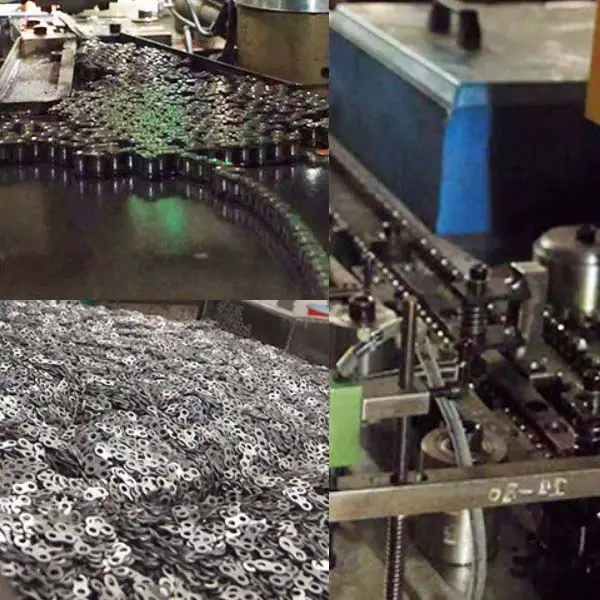
How do engineering chains handle misalignment between sprockets?
Engineering chains are designed to handle some degree of misalignment between sprockets. Misalignment can occur due to various factors such as improper installation, wear and elongation of the chain, or inaccuracies in the machinery. While some misalignment is inevitable in many industrial applications, excessive misalignment should be avoided to ensure optimal chain performance and longevity.
Here’s how engineering chains handle misalignment:
- Flexible Construction: Engineering chains are constructed with flexible components such as pins, rollers, and bushings. This design allows the chain to adapt to minor misalignments without putting excessive stress on the chain or sprockets.
- Articulating Joints: The articulating joints in the chain allow it to articulate smoothly around the sprockets, accommodating minor misalignment during the rotation. This helps reduce wear on the chain and sprockets.
- Tolerance for Misalignment: Manufacturers provide specifications for the allowable misalignment between sprockets. Engineering chains are designed to handle a certain level of misalignment within these tolerances without significantly affecting their performance.
- Proper Installation: Correct installation of the engineering chain is crucial to minimizing misalignment issues. Ensuring proper tension, alignment, and center-to-center distance between sprockets can help reduce misalignment and prolong chain life.
- Regular Maintenance: Regular maintenance, including chain inspection and lubrication, can help identify and address misalignment issues early on. Promptly correcting misalignment can prevent further damage and ensure efficient chain operation.
- Alignment Devices: In some cases, alignment devices or tools may be used during installation to ensure accurate alignment between the sprockets. These devices can help improve chain performance and reduce wear caused by misalignment.
It is essential to follow the manufacturer’s guidelines for chain installation, maintenance, and alignment to optimize the performance and service life of engineering chains. Addressing misalignment issues promptly and keeping the chain in proper working condition will contribute to the overall reliability and efficiency of the machinery or equipment in which the chain is used.
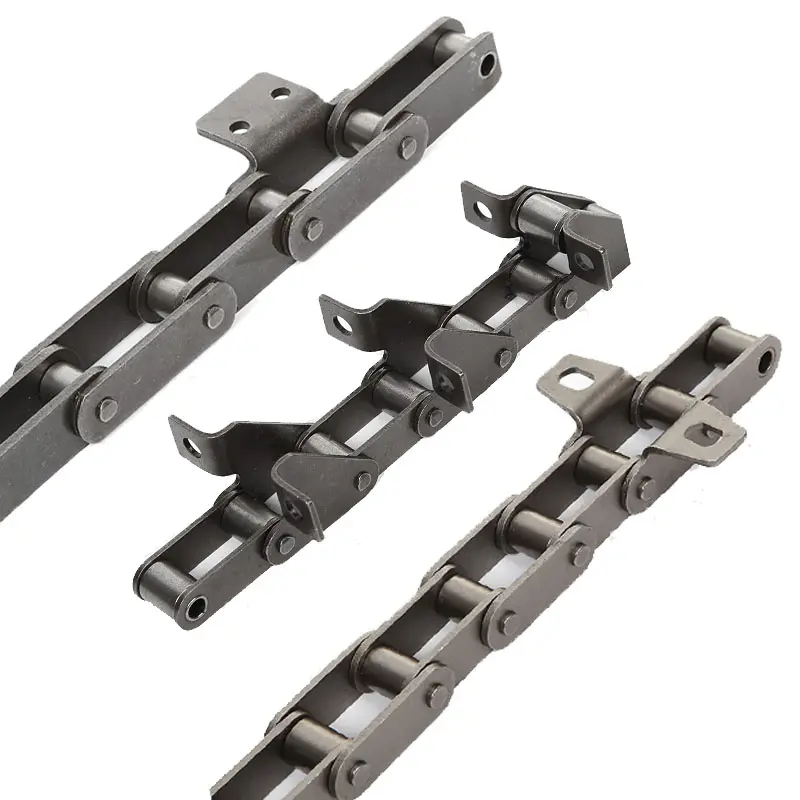
Can engineering chains be used for power transmission in conveyor systems?
Yes, engineering chains are commonly used for power transmission in conveyor systems. Conveyor systems are widely employed in various industries for material handling, and they require reliable and efficient power transmission methods to move heavy loads over long distances. Engineering chains are well-suited for these applications due to their robust construction, high load-carrying capacity, and versatility.
Conveyor systems often consist of a series of sprockets and a continuous loop of engineering chain that runs over these sprockets. The chain is driven by a motorized sprocket, and as it moves, it carries the conveyed material along the conveyor’s length. The design of engineering chains ensures smooth engagement with the sprockets, enabling efficient power transmission and precise material handling.
Depending on the specific requirements of the conveyor system, various types of engineering chains can be used. For instance, for applications where cleanliness is crucial, stainless steel chains with self-lubricating properties may be employed. In environments with high corrosion potential, corrosion-resistant coatings on chain components can extend the chain’s lifespan.
Furthermore, engineering chains can be customized to fit different conveyor configurations, allowing for the design of complex conveyor systems that suit specific production processes or spatial limitations.
In summary, engineering chains are an excellent choice for power transmission in conveyor systems due to their durability, load capacity, and adaptability. They ensure smooth and reliable operation, making them indispensable in material handling and conveyor applications across various industries.
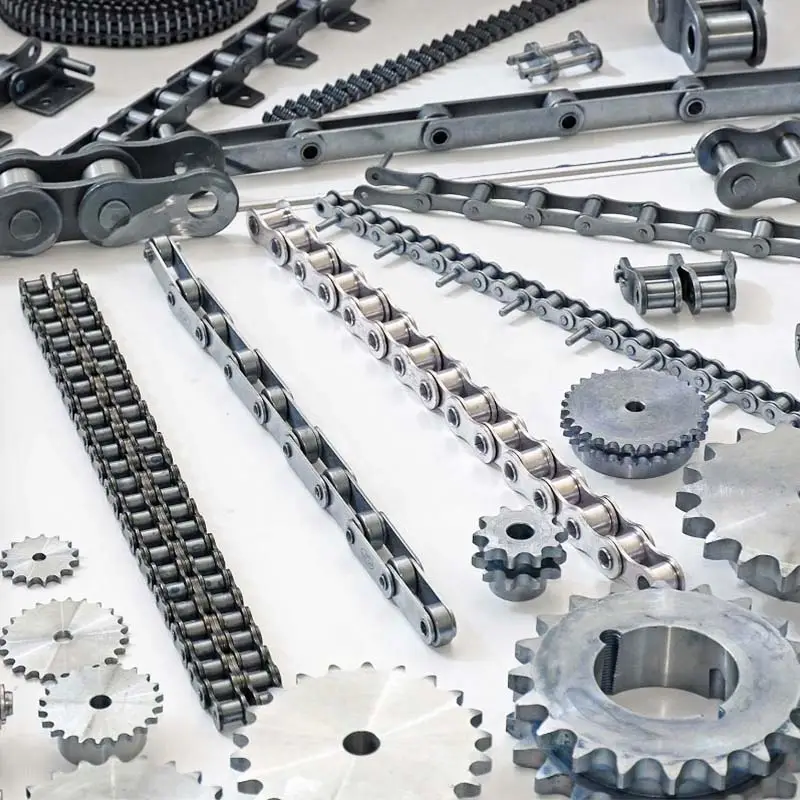
What are the different types of engineering chains available in the market?
Engineering chains come in various types, each designed to meet specific industrial needs and operating conditions. Here are some of the common types of engineering chains available in the market:
- Roller Chains: Roller chains are the most common type of engineering chain and consist of cylindrical rollers that engage with the sprocket teeth for smooth power transmission. They are widely used in industries like manufacturing, agriculture, and automotive.
- Drag Chains: Drag chains, also known as conveyor chains or slat chains, have flat, interlocking plates connected together. They are used in conveyor systems for material handling applications, especially in heavy-duty and abrasive environments.
- Hollow Pin Chains: Hollow pin chains feature hollow pins that allow for the insertion of cross rods or attachments, making them versatile for handling irregularly shaped loads or for use as a conveyor in specific industries.
- Double Pitch Chains: Double pitch chains have larger pitch distances between the links, resulting in lighter weight and lower cost. They are commonly used in low-speed and light-load applications.
- Leaf Chains: Leaf chains, also known as forklift chains, are used in lifting applications, such as forklift trucks and other material handling equipment.
- Side Bow Chains: Side bow chains have links with a curved or bent shape, allowing them to flex and bend laterally, making them suitable for curved or circular conveyor applications.
- Apron Chains: Apron chains are used in apron conveyors, typically found in the mining and cement industries, for transporting heavy and abrasive materials.
- Specialty Chains: There are various specialty chains available for specific industries and applications, such as escalator chains, agricultural chains, bottle conveyor chains, and more.
Each type of engineering chain has its own unique design and features to cater to specific requirements. The choice of chain type depends on factors like load capacity, speed, environmental conditions, and the application’s needs. It’s essential to select the appropriate chain type and ensure proper maintenance to achieve optimal performance and longevity in industrial operations.


editor by CX 2024-04-15