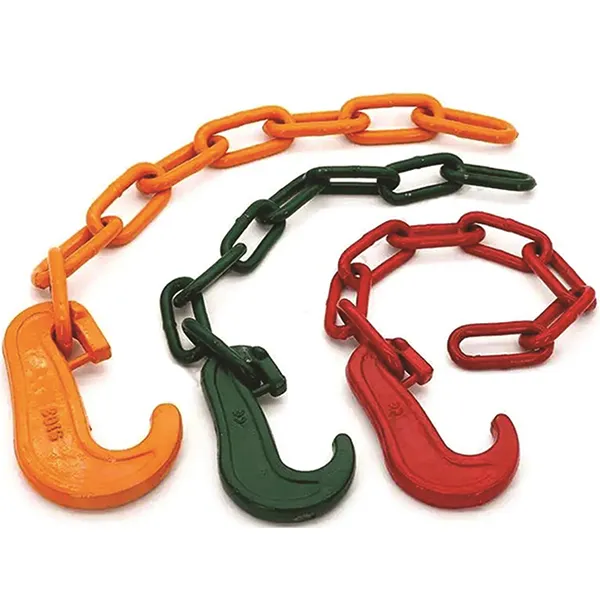
Lashing & Binding Chain – 20Mn2 / 25MnV | 6–19 mm | Powder Coated or Galvanised
As one of the engineer class chain manufacturers, suppliers, and exporters of mechanical products, We offer engineer class chain and many other products.
Please get in touch with us for details.
Mail:[email protected]
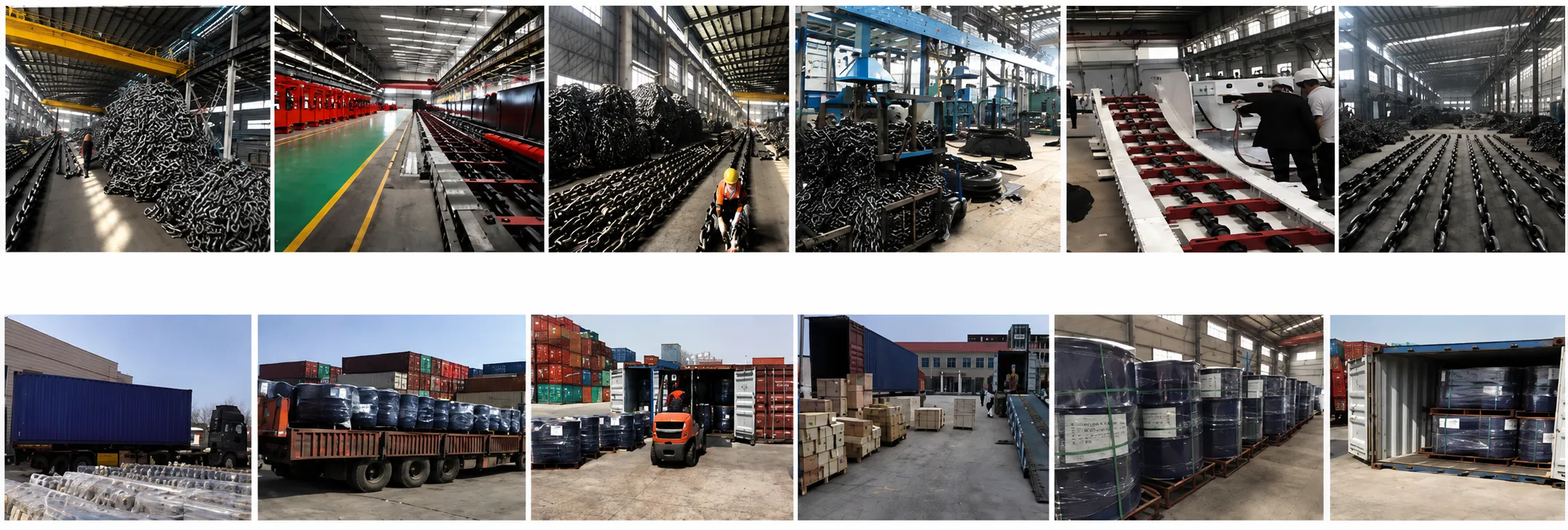
Certified by | Lloyd’s Register · ABS · Bureau Veritas · DNV · ISO 9001 · ISO 14001 · CE Mark
Product Overview
Alloy Steel Lashing Chain for Cargo and Equipment Securing
Lashing and binding chains from Ever-power Engineer Class Chain Co., Ltd are designed as high-efficiency load securing components for freight transport, port container operations, warehouse storage, and heavy equipment mobilisation. Links are precision die-forged from 20Mn2 or 25MnV alloy steel and surface-finished with galvanising or powder coating.
Each chain is fitted with an innovative rubber anti-friction sleeve and operates through a dual-chain cross-winding system with a ratchet-type locking mechanism, providing 360° stable lashing and eliminating load shift risk during transport. Compared to conventional wire rope lashing, the system offers significantly faster securing and release cycles.
The modular connecting link design supports rapid assembly and repeated reuse. Twelve standard sizes from 6 to 19 mm cover breaking loads from 44 to 453 kN. The chain is particularly suited to mining transport, port container securing, and mobile reinforcement of large mechanical equipment.
Technical Data
Dimensional & Load Specifications
Material: 20Mn2 / 25MnV alloy steel | Dimensions in mm · Loads in kN · Weight in kg/m
A / B variants at 10 mm and 13 mm denote different inner length and outer width profiles · Material: 20Mn2 / 25MnV alloy steel
Construction & Design
Product Features
Material: 20Mn2 / 25MnV Precision Die-Forged Alloy SteelLinks are precision die-forged from 20Mn2 or 25MnV alloy steel, providing high tensile strength, good impact resistance, and consistent dimensional accuracy across the full production run. Forging is preferred over casting for lashing chain applications due to superior grain structure and fatigue performance. | Rubber Anti-Friction SleeveEach chain is fitted with a rubber anti-friction sleeve at the contact point with the load surface. The sleeve protects the cargo surface from chain marking and reduces the risk of chain movement under vibration during transport, without reducing the lashing tension applied by the ratchet system. |
Dual-Chain Cross-Winding with Ratchet LockingThe dual-chain cross-winding system combined with ratchet-type locking provides 360° stable lashing and prevents load displacement during transit. The ratchet mechanism holds the applied tension without manual re-tightening, reducing securing time compared to conventional wire rope methods. | Modular Connecting Link — Fast Assembly and ReuseThe modular connecting link design allows the chain to be rapidly assembled, adjusted in length, and disassembled for reuse. This is particularly useful in port and mining logistics operations where the chain securing configuration changes between each load cycle. |
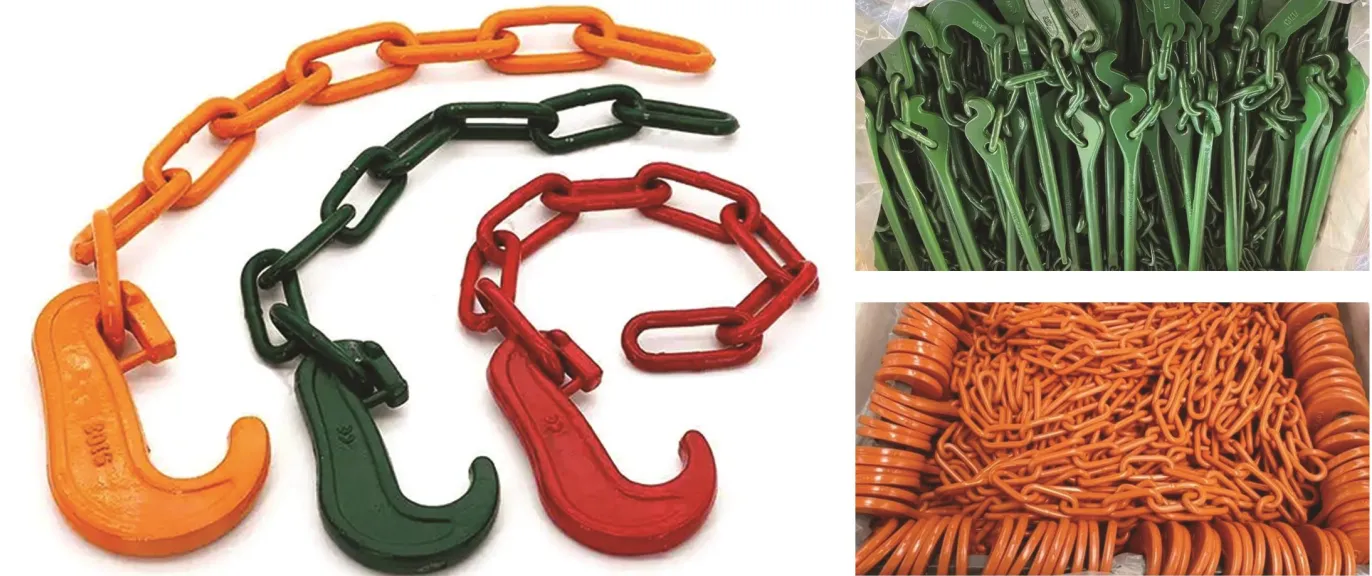
Surface Treatment: Galvanising or Powder CoatingAvailable with hot-dip galvanising or powder coating in standard colours including orange, green, and red. Powder coating provides visual identification of chain grade and owner, and adds a layer of corrosion and abrasion protection suitable for outdoor transport and port environments. | Size Range: 6 to 19 mm · Breaking Loads 44–453 kNTwelve standard sizes from 6 mm to 19 mm cover a wide range of cargo securing applications, from light freight on flatbed trailers to heavy industrial equipment and mining machinery. Two profile variants (A/B) are available at 10 mm and 13 mm to accommodate different connecting hardware. |

FAQ
Frequently Asked Questions
What is the difference between lashing chain and lifting chain?
Lashing chains are designed for load securing during transport and storage, where the chain is tensioned horizontally or diagonally against the cargo to prevent movement. Lifting chains (such as G80 or G100) are designed for vertical overhead lifting and carry a formal working load limit with a 4:1 safety factor. Lashing chains must not be used for overhead lifting.
What do the A and B variants mean at 10 mm and 13 mm?
At 10 mm and 13 mm diameter, two link profile variants are available with different inner lengths and outer widths. Both variants carry the same tensile and breaking loads for that diameter. The choice between A and B depends on the connecting hardware and load binder used in the specific lashing assembly.
What surface colours are available for powder-coated chain?
Standard powder coating colours include orange, green, and red. Custom colours can be produced on request for fleet identification or operator marking systems. Hot-dip galvanising is also available as an alternative surface treatment for outdoor or high-humidity environments.
What is the breaking load for 16 mm lashing chain?
The breaking load for 16 mm lashing chain is 320 kN, with a tensile load of 160 kN and a weight of 4.58 kg/m.
Can the chain be reused after each securing operation?
Yes. The modular connecting link design is intended for repeated assembly and disassembly. Chains should be inspected for wear, deformation, or corrosion before each reuse and removed from service if any link shows visible elongation, cracking, or reduction in cross-sectional area.
Are load binders and hooks available to complement the chain?
Yes. Load binders (收紧器) in ratchet and lever types, and grab hooks and clevis hooks compatible with lashing chain diameters, are available from Ever-power. Please specify the chain diameter and required lashing assembly configuration when enquiring.
Also from Ever-power
Related Products
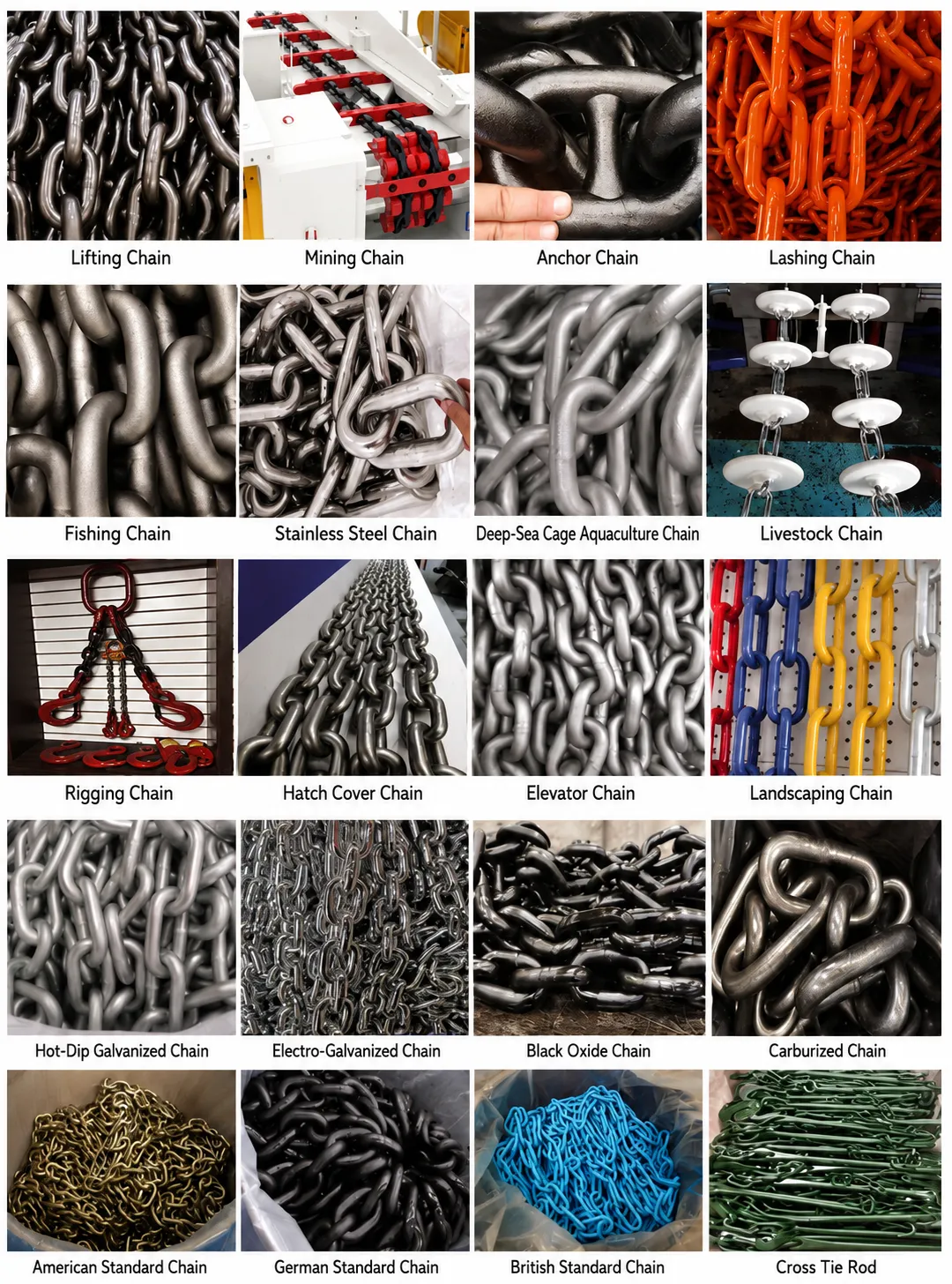
Rigging Hardware Ratchet and lever types · 1/4–5/16 to 1/2–5/8 in · for use with lashing chain assemblies | Rigging Hardware Grab hooks and clevis hooks · 1/4 to 3/4 in · chain sling and lashing termination |
Lifting Chains EN 818-2 · 6–48 mm · overhead lifting — not for lashing use | Rigging Hardware Bow and D-type · 3/16 to 2-1/2 in · chain joining and anchor connections |
Mining Chains DIN 22252 · Grade B/C · 10×40 to 42×146 mm · scraper conveyors and AFC | Specialty Chains 304 / 316 / 316L · 2–32 mm · corrosion-resistant applications |
Lashing and binding chains are part of a wider category of cargo securing and load control products. Those specifying chain for transport and port logistics may also find reference in heavy-duty chain engineering data and power transmission chain standards relevant to adjacent material handling equipment. For conveyor chain specifications used in mining and port bulk handling systems, conveyor chain selection guidance and industrial roller chain specifications provide complementary technical context.
Applications of Engineering Class Chain
The engineered chain is a solid workhorse, ideal for high load capacities for many industrial applications that include or require harsh operating conditions. The engineered chain also provides fatigue strength for near-continuous operation. You don’t have to worry about stopping equipment due to poor performance or continuing equipment failure due to overuse. Engineering chains are versatile, working in the food service industry and some of the most challenging jobs on the planet, such as oil drilling, forklift operations, timber applications, road cranes, and elevators. While these applications are often harsh with high temperatures and volumes of sand, dirt, grease, and oil, engineered chains get the job done with high power transfer rates and unmatched durability. Engineered chains are a natural choice when your organization is looking for something to move heavy equipment and handle high shock loads.
Uses of Engineering Class Chains
Food service is just one of many applications of this type of multifunctional engineering chain. They are used in some of the toughest applications, such as oil drilling, operations involving large amounts of sand, dirt and sticky crude. They also saw the use of forklifts that would be subjected to repeated stress and bumps. Engineering chains are the engineer’s first choice when the application requires compact space, the maximum possible amount of power transfer and a high level of durability.