
Slag Conveyor Chain – GB/T 12718 | Grade B & C | 14–30 mm
As one of the engineer class chain manufacturers, suppliers, and exporters of mechanical products, We offer engineer class chain and many other products.
Please get in touch with us for details.
Mail:[email protected]
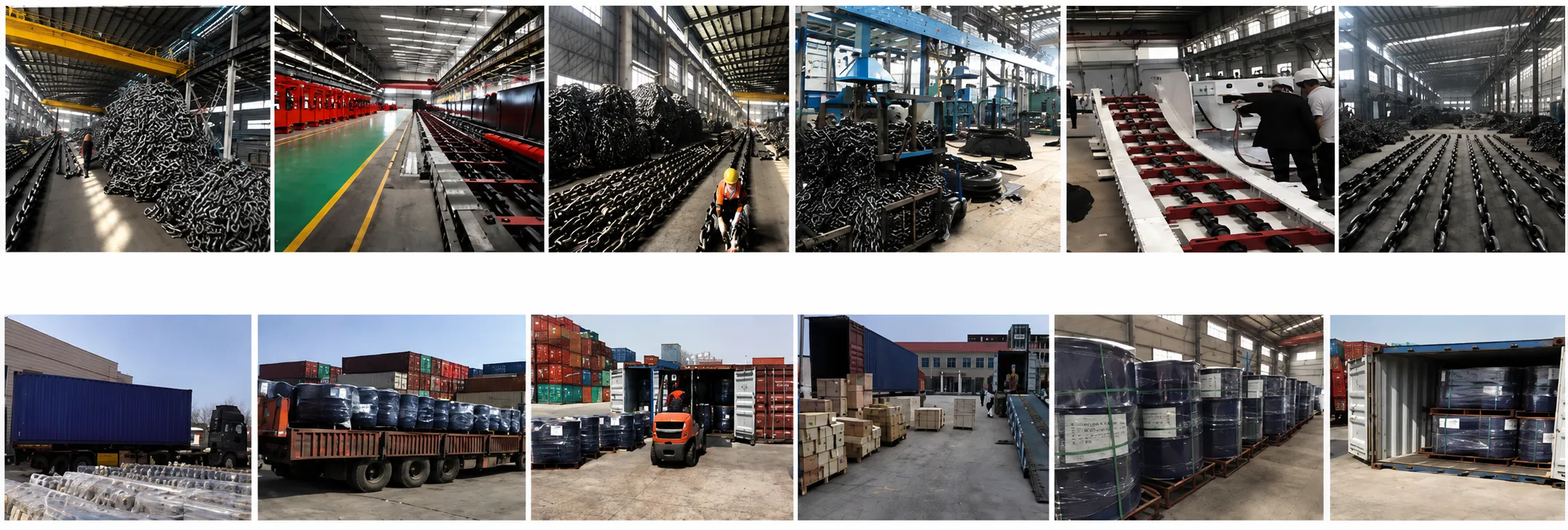
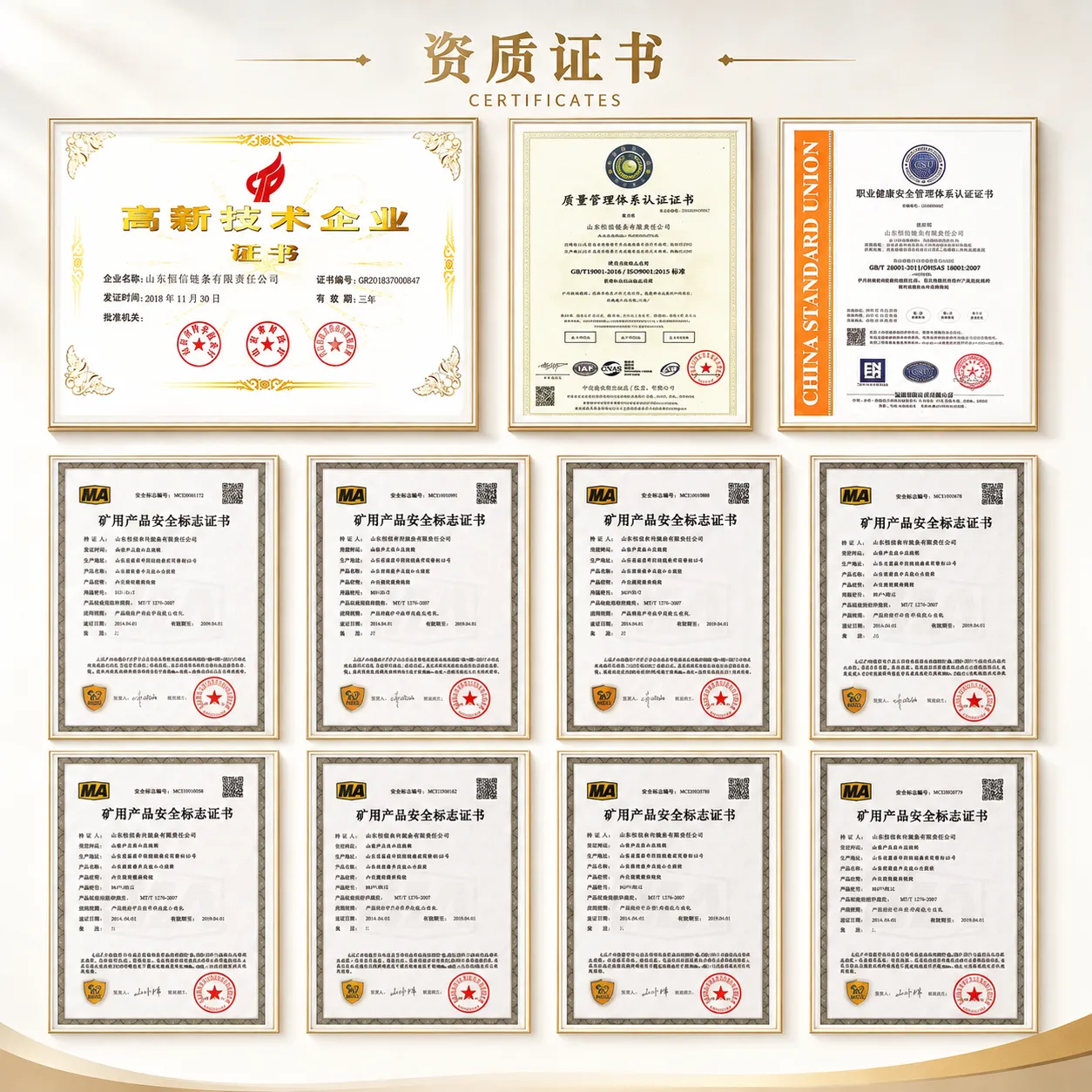
Standard: GB/T 12718 | ISO 9001 · ISO 14001 · CE Mark · MA Mining Safety · Lloyd’s Register · DNV
Product Overview
Round Link Chain for Submerged Slag and Ash Handling
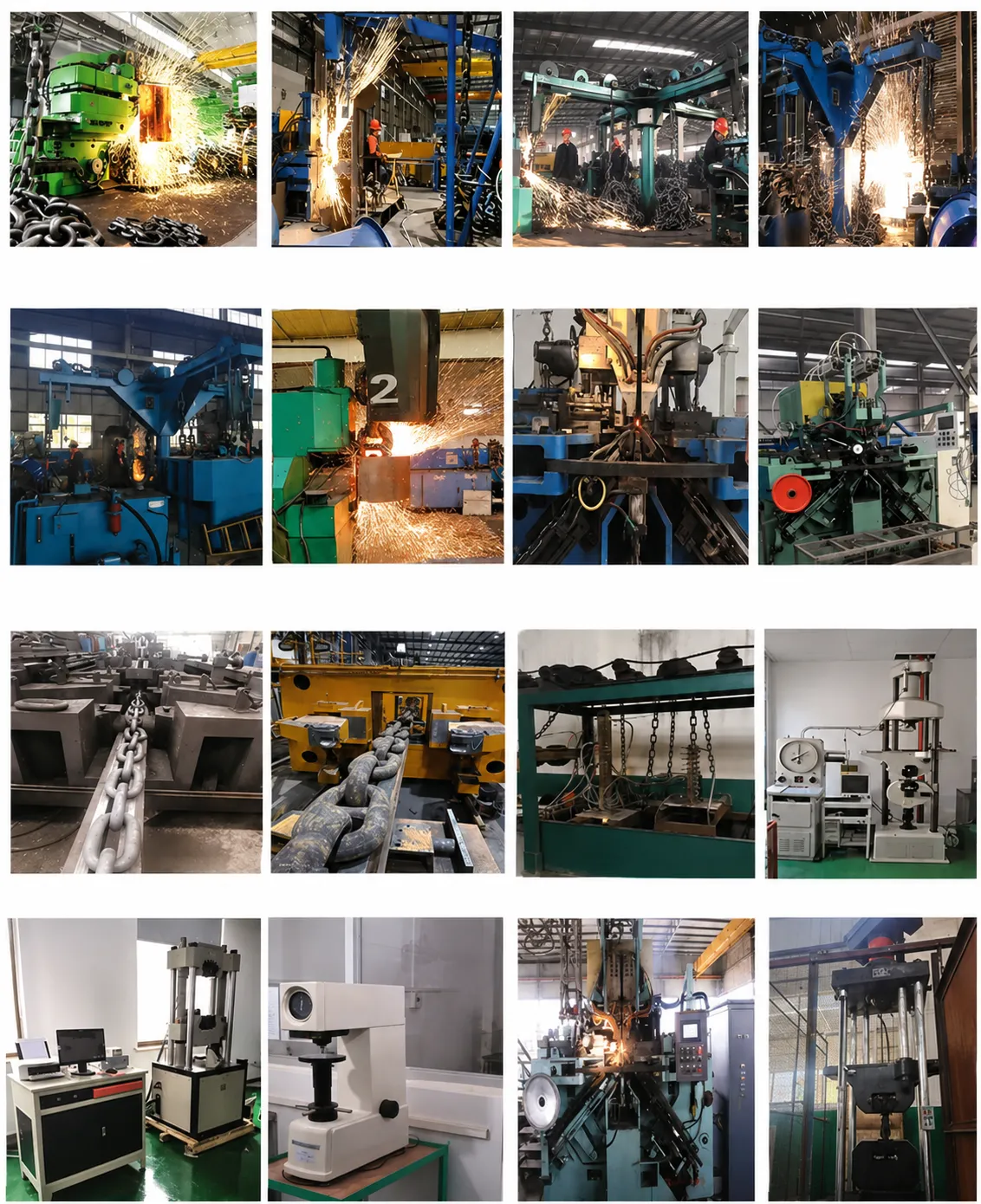
Slag conveyor chains are round link chains designed for submerged scraper conveyors (捞渣机) used in bottom ash and slag extraction from coal-fired power stations, industrial boilers, and furnace plant. Operating conditions combine high temperature, wet abrasive slag, and continuous heavy-load cycling — requirements that differ significantly from standard mining or lifting chain duty.
Ever-power Engineer Class Chain Co., Ltd manufactures slag conveyor chains to GB/T 12718, available in Grade B and Grade C, covering diameters from 14 to 30 mm. Minimum breaking loads range from 190 kN (14 mm Grade B) to 1,130 kN (30 mm Grade C). Minimum elongation at break is 10% across all sizes and grades.
Chain dimensions are matched to standard submerged scraper conveyor trough profiles. Multiple size combinations are available within the same nominal diameter to accommodate specific equipment configurations from different conveyor manufacturers.
Technical Data
Dimensional & Load Specifications
Reference standard: GB/T 12718 | Dimensions in mm · Weight in kg/m · Breaking loads in kN · Min. elongation at break: 10%
Multiple inner length variants at the same diameter accommodate different conveyor trough configurations · Min. elongation at break: 10% (all sizes and grades)
Construction & Standards
Product Features
Standard: GB/T 12718All slag conveyor chains are manufactured and tested to GB/T 12718, the Chinese national standard covering dimensional tolerances, mechanical property requirements, and acceptance test procedures for mining and industrial round link chains used in scraper conveyor applications. | Grade B and Grade CGrade B provides the standard breaking load for each diameter. Grade C provides a higher breaking load — approximately 25–35% above Grade B at the same size — for heavier duty or higher-throughput slag extraction systems. Both grades carry a minimum elongation at break of 10%. |
Multiple Profile Variants per DiameterAt 22 mm, 26 mm, and 30 mm nominal diameter, two or three inner length and inner width combinations are available. This accommodates the dimensional requirements of different submerged scraper conveyor manufacturers without requiring custom chain production. | Designed for Wet Abrasive Slag DutySlag conveyor chains operate submerged in water containing abrasive ash particles at elevated temperatures. The alloy steel composition and heat treatment specification are selected to provide adequate wear resistance and fatigue life under these continuous wet abrasive load conditions. |
Size Range: 14 to 30 mmTwelve size-profile combinations from 14 mm to 30 mm diameter cover the range of submerged scraper conveyors used in coal-fired power station bottom ash systems, from smaller boiler units through to large utility-scale generating plant. | Compatible with Scraper Flight AssembliesSlag conveyor chains are dimensioned to be compatible with standard scraper flight bar and trough assemblies used in submerged chain conveyors. Chain dimensions should be verified against the equipment manufacturer’s specification before ordering to confirm interchangeability. |
FAQ
Frequently Asked Questions
What is a slag conveyor chain used for?
Slag conveyor chains (捞渣机链条) are round link chains used as the traction element in submerged scraper conveyors (捞渣机). These conveyors extract bottom ash and slag from water-filled hoppers beneath coal-fired boilers, industrial furnaces, and waste incineration systems, conveying the wet ash to a discharge point for disposal or reuse.
What is the difference between Grade B and Grade C?
Grade C provides a higher minimum breaking load than Grade B at the same nominal diameter. For example, at 26 mm diameter, Grade B breaking load is 670 kN and Grade C is 850 kN. Grade C is specified for higher-throughput systems or where a greater safety margin is required. Both grades carry a minimum elongation at break of 10%.
Why are there multiple profile variants at the same nominal diameter?
Different submerged scraper conveyor manufacturers use different trough widths and scraper pitch dimensions at the same nominal chain diameter. Multiple inner length and inner width combinations are available at 22 mm, 26 mm, and 30 mm to match specific equipment makes without requiring custom chain production.
Is slag conveyor chain the same as mining round link chain?
Both are round link chains manufactured to GB/T 12718, and their dimensional and load specifications overlap. However, slag conveyor chains are specifically dimensioned for submerged scraper conveyor applications where the trough geometry and scraper attachment points differ from those of coal face armoured face conveyors. Please verify dimensions against your specific equipment before ordering.
What information is needed to confirm the correct chain specification?
To confirm the correct specification, please provide: nominal chain diameter, inner length, inner width, required grade (B or C), quantity, and if possible the conveyor manufacturer and model designation. This allows confirmation of the correct profile variant before production.
Also from Ever-power
Related Products
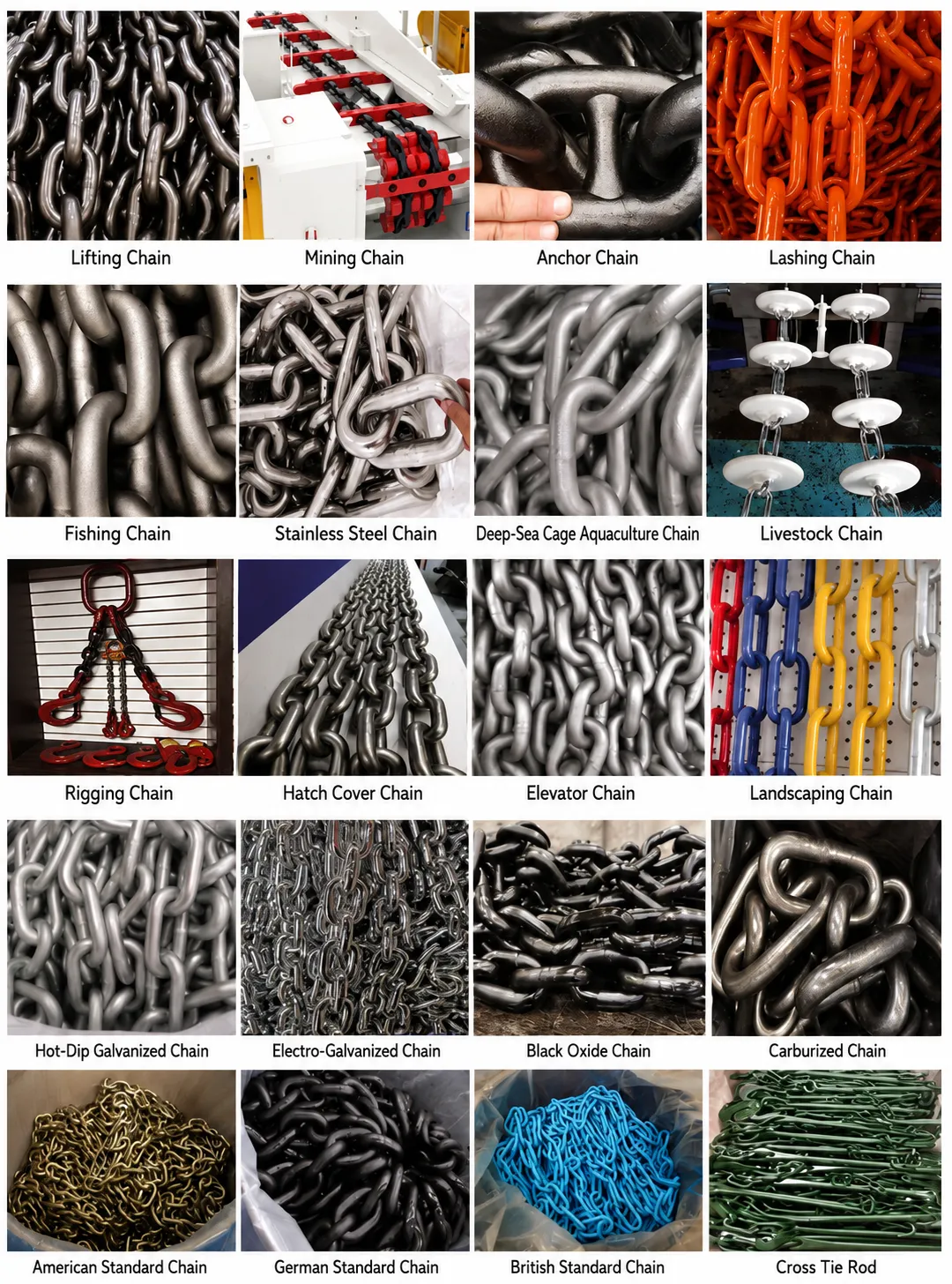
Mining Chains DIN 22252 · Grade B/C · 10×40 to 42×146 mm · armoured face conveyors and scraper systems | Mining Chains GB/T 12718 · Grade C/D · 22×86 to 60×197 mm · compact-profile scraper conveyors |
Mining Accessories Central Chain Scraper Flight Bar Compatible with 22×86 to 42×146 mm chain · matched to conveyor trough dimensions | Mining Accessories Round Link Chain Connecting Links Flat-arc and flat-saw-tooth types · 18×64 to 48×152 mm |
Specialty Chains 304 / 316 / 2520 · 2–32 mm · high-temperature and corrosion-resistant conveyor applications | Lifting Chains EN 818-2 · 6–48 mm · maintenance lifting in power station and industrial plant |
Slag conveyor chains are part of a wider category of industrial round link chain products for power generation and process plant material handling. Those specifying chain for coal handling or ash disposal systems may also find reference in conveyor chain selection and load rating guidance and power transmission chain standards relevant to adjacent plant drives. For heavy-duty chain products used in connected infrastructure, heavy-duty chain engineering data and industrial roller chain specifications provide complementary technical context.
Applications of Engineering Class Chain
The engineered chain is a solid workhorse, ideal for high load capacities for many industrial applications that include or require harsh operating conditions. The engineered chain also provides fatigue strength for near-continuous operation. You don’t have to worry about stopping equipment due to poor performance or continuing equipment failure due to overuse. Engineering chains are versatile, working in the food service industry and some of the most challenging jobs on the planet, such as oil drilling, forklift operations, timber applications, road cranes, and elevators. While these applications are often harsh with high temperatures and volumes of sand, dirt, grease, and oil, engineered chains get the job done with high power transfer rates and unmatched durability. Engineered chains are a natural choice when your organization is looking for something to move heavy equipment and handle high shock loads.
Uses of Engineering Class Chains
Food service is just one of many applications of this type of multifunctional engineering chain. They are used in some of the toughest applications, such as oil drilling, operations involving large amounts of sand, dirt and sticky crude. They also saw the use of forklifts that would be subjected to repeated stress and bumps. Engineering chains are the engineer’s first choice when the application requires compact space, the maximum possible amount of power transfer and a high level of durability.